Fall has arrived, and with it comes the flurry of wildlife preparing for the long winter ahead. Animals employ a range of strategies to survive the coldest months of the year. Some species hibernate, retreating into deep rest as their bodily functions slow to a crawl until the warmth of spring returns. Others migrate, journeying to milder climates where food is easier to find. And then there are those who tough it out, adapting to endure the season’s harsh conditions. One of these hardy creatures is a familiar one—the Eastern Gray Squirrel.
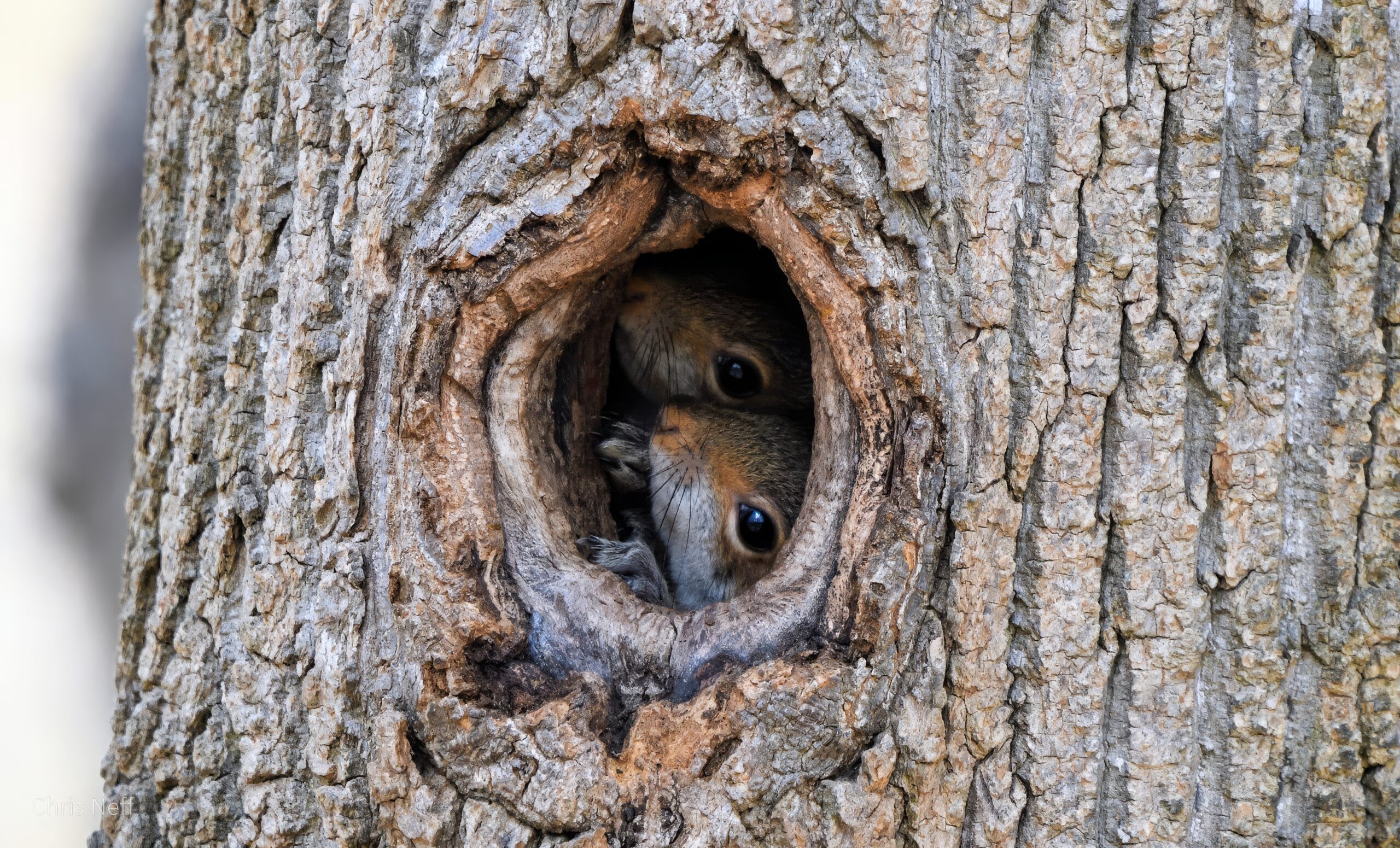
As you pull out your puffer jackets and turtleneck sweaters, squirrels are bundling up in their own way. They grow a thick, double-layered winter coat that provides excellent insulation. At the same time, they’re packing on the ounces, building fat reserves to generate extra warmth. Another strategy for staying cozy involves curling up in a snug tree cavity lined with fur, feathers, or grasses. Some also take shelter in a drey—the shaggy, leafy nest-like structures you’ve probably spotted high in the treetops. In frigid conditions, squirrels can go into torpor, a lighter version of hibernation.
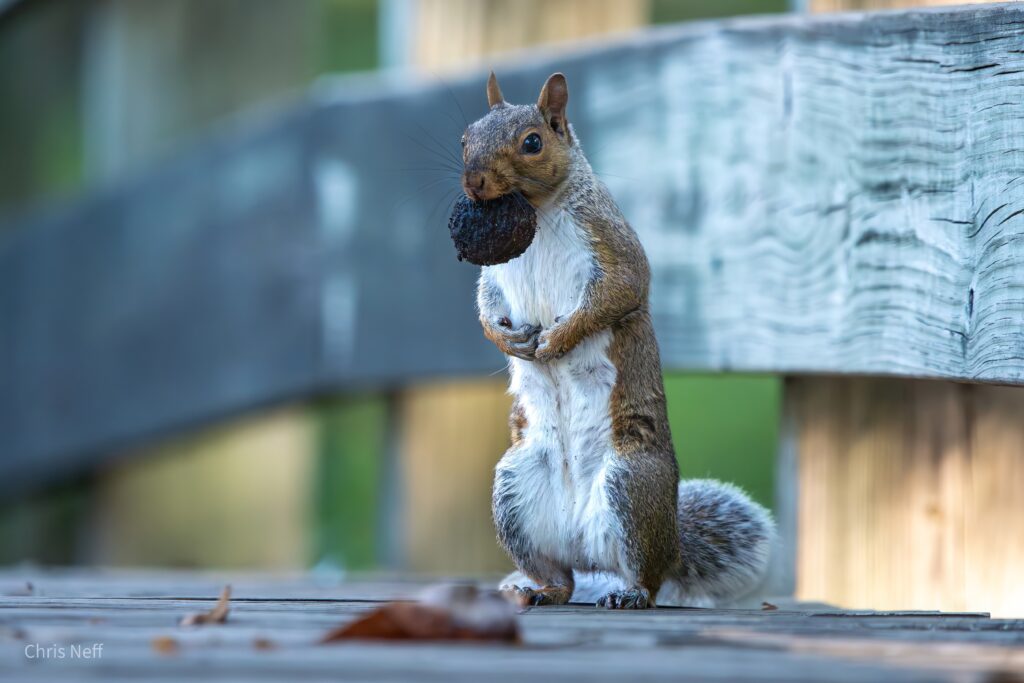
Just as important as keeping warm is keeping fed. In late summer and fall, squirrels stash away hundreds or even thousands of nuts throughout their home range, which can span several acres. While some squirrel species hoard large supplies in a single spot, Eastern Gray Squirrels practice what’s called scatter hoarding—hiding smaller amounts of food in many different locations. Most of us have witnessed this frantic burying of acorns that looks chaotic, but it’s actually a clever survival strategy. By spreading out their caches, squirrels make it harder for would-be thieves—like blue jays and rival squirrels—to steal their stores.
They even employ tactics such as deceptive caching, pretending to bury a nut in one location to mislead onlookers before hiding it somewhere else. Sometimes they’ll dig up a cache after a few days and rebury it elsewhere, reinforcing their memory of the hiding spots. To relocate their treasures, squirrels rely on spatial mapping, landmarks, and their keen sense of smell.
Of course, even the most diligent squirrel forgets a few nuts, and that’s where the magic of nature takes over. A buried acorn left untouched through the winter may sprout come spring, growing into a young oak tree. Years later, that tree will produce acorns for future generations of squirrels to eat and hide, continuing a cycle that benefits both species. In a sense, squirrels are gardeners of the forest, unintentionally cultivating the trees that sustain them.
Today, many people see squirrels as nuisances; pesky raiders of bird feeders or unpredictable daredevils darting across the road. And it’s true that the Eastern Gray Squirrel has become an invasive species in some parts of the world. But here in New Jersey, they’re a native species that has adapted remarkably well to life alongside humans in ever-expanding suburbs and cities. As so many other forms of wildlife struggle to survive, perhaps it’s worth appreciating these clever, charismatic rodents for their resilience. In their grit and determination, we might just find inspiration to stay steadfast through our own winters.
Emily Reed is the Director of New Jersey Audubon’s Nature Center of Cape May.