COURT HOUSE – Refugees are a natural consequence of war, as the civilian population flees bombs, tanks and advancing soldiers.
As a consequence of World War II, approximately 350,000 displaced Europeans were allowed to relocate to the United States, including about 80,000 Ukrainians. Many either had no homes to return to in their countries, or in the case of some, wished not to return to a homeland that fell under the control of the former Soviet Union.
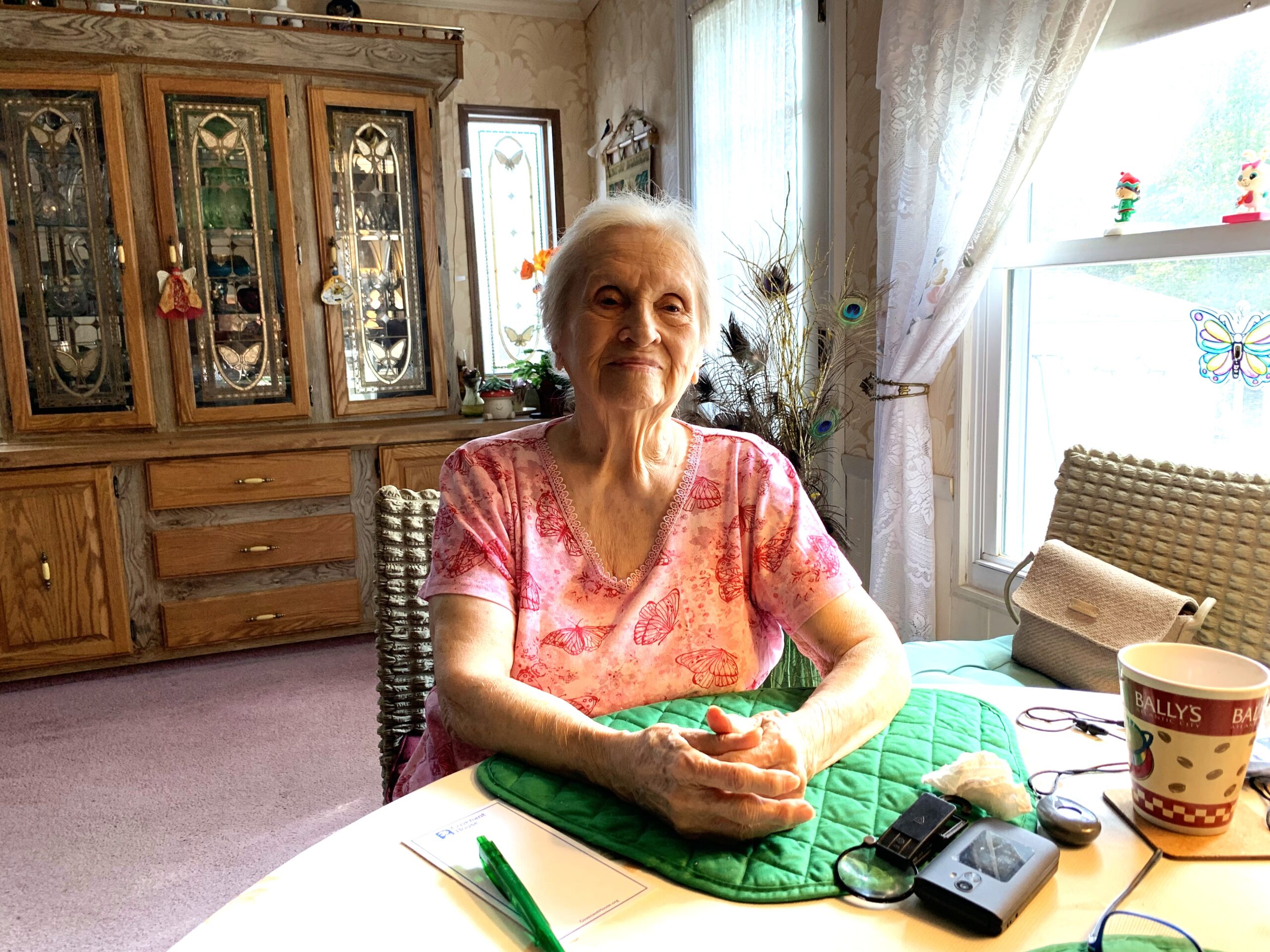
Helen Super (nee Elenbryczak), 92, has lived in Cape May Court House for the past 29 years. Born on Aug. 11, 1933, in Rivne, Ukraine, Super was caught up in the war between Germany and the Soviet Union, which was a U.S. ally in World War II. Later, the family would take shelter from American bombs.
Super was the oldest child of an itinerant Christian minister, who sometimes traveled by bicycle between churches. When she was still quite young, the family moved to Poland. She had a brother named Alexander, born when she was 9, and a sister, Irene, who she said was seven years younger than she. Alexander was a baby when he and their father became separated from their mother, Pauline, and the girls.
It happened that her father, Sebastian was given instructions to go from Poland to Lviv, Ukraine. He left the family in Warsaw to go to Lviv, 211 miles away. While he was there, he was also attempting to get paperwork completed to move the entire family to Austria, which was controlled by the Germans.
“When the Russians occupied an area it wasn’t pleasant,” Super said.
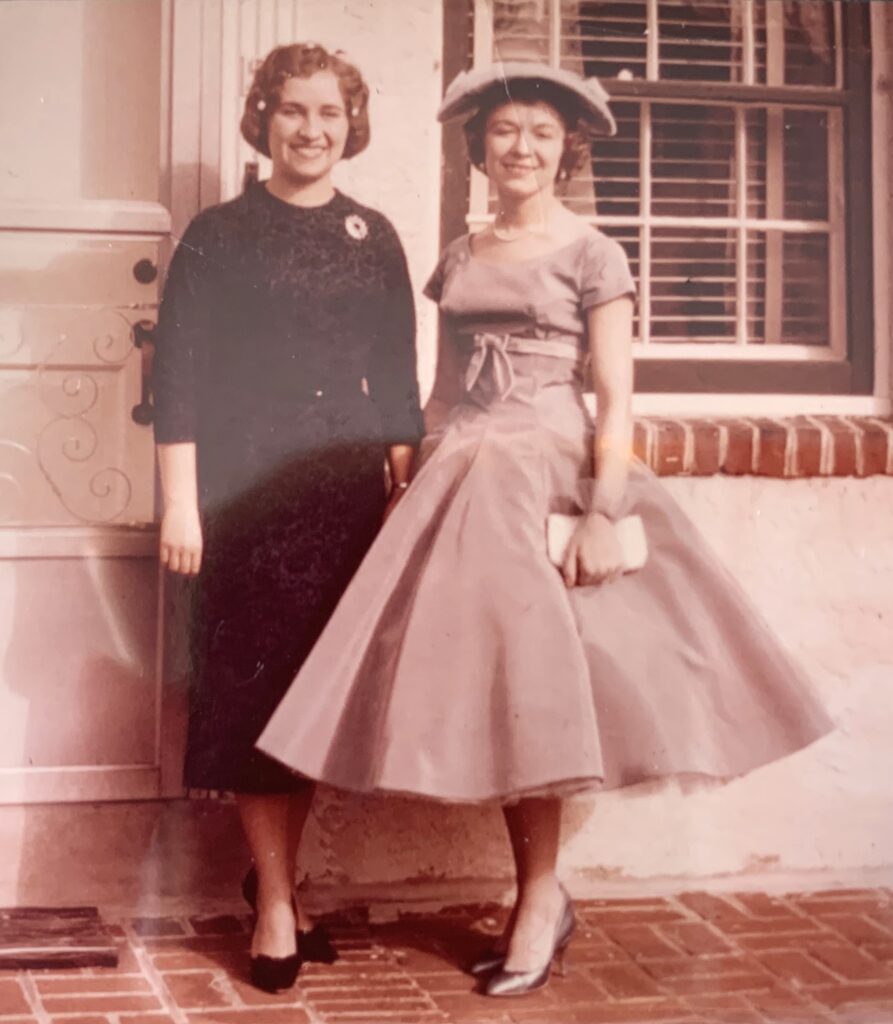
While he was there Pauline left the girls with some women in the apartment house where they were staying in Warsaw, and, taking Alexander, who was about a year and a half old, she went to see her husband in Lviv. They boarded a train for the 211-mile journey, and by the time Pauline arrived Sebastian decided they would have to leave very soon.
He told Pauline to leave Alexander with him and go back and get the girls, planning to take the family to Austria as soon as they returned. However, before they could get back the Soviets occupied all of Ukraine, and that was the last time Pauline saw her husband and son.
In the back-and-forth battle between Germany and the Soviet Union, Super said the family was in Ternopil for a time. She recalled it as being in Poland, but the map shows it as being in Ukraine. She seems to recall Soviet occupation, at any rate, something they were not able to escape, and remembers the Russians being very active.
“They were always busy. They arrived at night, and I remember at one point they grabbed the next-door neighbors at night and we never saw the family again,” Super said.
She also recalls a prison in the middle of town, and everyone wondered why the Russians blasted music from loudspeakers on every corner of the prison.
“It’s because they were torturing people,” Super said.
She said at one point the Germans liberated the town and the prison and they found that many there had been tortured or murdered. The Germans piled bodies on carts to transfer them from the prison to somewhere outside the town in the heat of the summer. She recalls her mother telling the girls to get under the table so they would not look out the window, and she sprayed perfume to hide the odor.
They were definitely in Poland when the Germans began the pogrom on the Jewish people, and those living in Poland were sent to the ghetto. She said she clearly recalled the mood at the time.
“Before the war everyone lived together and got along,” she said, referring to Jews and non-Jews. “It was horrible seeing the neighbors taken away.”
The original welcoming attitude toward the Germans, who were seen as liberators from the Soviets, was changing. Super said she recalls one day while their Mom went to the market, they were looking out the window of their apartment and the girls saw a truck carrying Jewish citizens. While they watched, a Jewish girl attempted to escape, jumping off the truck and running away. However, she was caught by a German soldier who dragged her across the cobblestones back to the truck.
“I was so scared. I thought we were next,” Super said.
The Soviet army was making gains, and people decided it was best to flee into Germany. Super remembers people fleeing the Russians in their night clothes as bombs were falling in Warsaw.
“People from our church escaped on a freight train. They said, ‘Come with us,’ and with only the clothes on our back we got on the train. We ended up in Germany and our people had to work in a factory,” Super said.
This exodus in “cattle cars” was outlined in a book titled “The Last Million,” by David Nasaw, whose book corroborates some other details of Super’s personal story.
Super recalled there not being much to eat at the time, and the factory where some of her countrymen were sent to work was about 1.2 miles away. She said she and her sister were given the job of carrying boiled potatoes and gravy to the workers.
“We would stop on the way and eat,” she said.
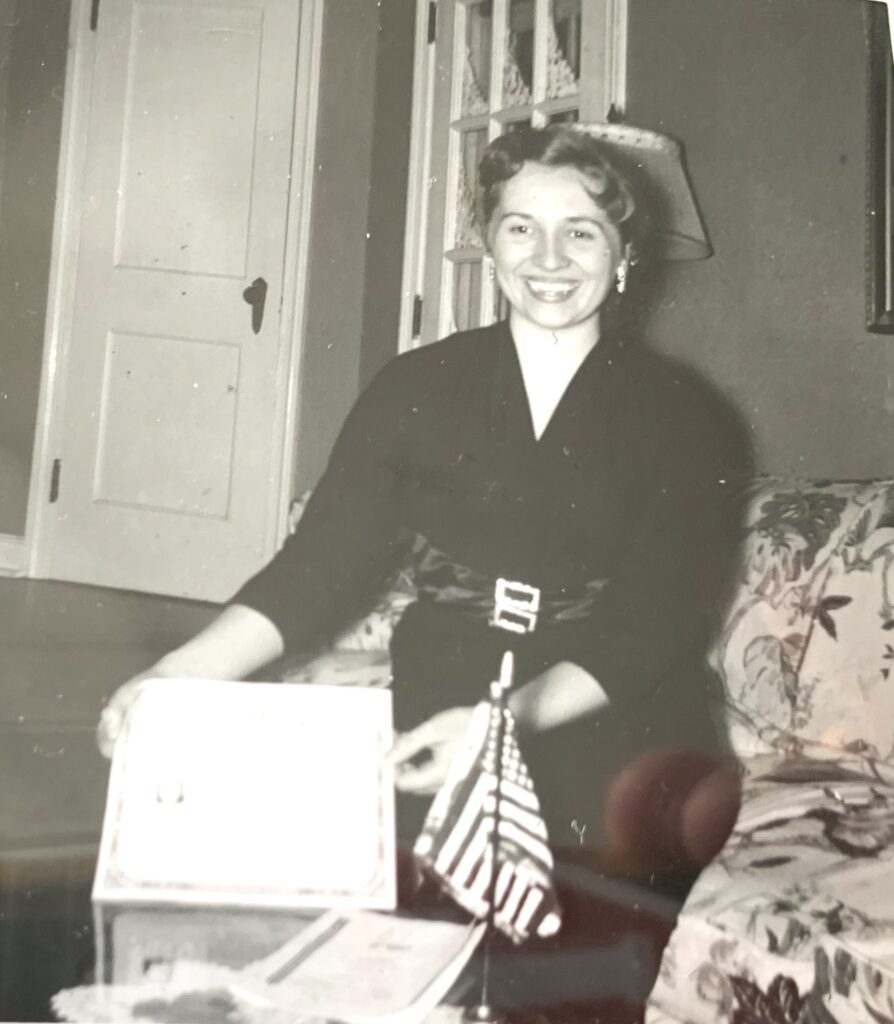
Other than the hardships imposed by the war, she said the German people were very nice. She, her Mom and sister remained there about five years, until the American occupation, which came after an Allied bombing campaign against Germany. She said the bombing generally targeted the big cities, but the Germans were building a bunker in the area that became a target, as did the factory. She said the workers fleeing the bombing might have been confused with soldiers.
“I remember a woman being killed in the shelling and her child, a young girl, crying, ‘Momma! Momma!’ Soon the Americans occupied the village,” she said.
According to Super, the Americans gathered the refugees and put them in camps by nationality. She said the refugees were given visas to various countries willing to sponsor them, including the United States, Canada and Great Britain.
“Our sponsor was in Minnesota,” she said.
They boarded a ship in Europe and traveled to New York Harbor, where they were put on a bus with other people destined for Minnesota. Super, her sister and Mom went to the home of their sponsor. The husband was a bus driver and his wife was a schoolteacher. They had five sons, and the couple ran a farm besides their outside jobs. Super said the refugee family soon realized the sponsors thought they were free labor.
“Mom was supposed to be the housekeeper and cook,” she said. “We girls were not to go to school.”
They had been put in contract with a Ukrainian woman who spoke fluent English, and after a meeting with this woman and the sponsors, Irene was allowed to go to school. Super was about 16 by now and was expected to work on the farm. She said the living conditions were less comfortable than their sponsors’. She said during meals the refugees were given skim milk, while the family had whole milk. She said they lived upstairs with another Ukrainian family and there was no heat upstairs.
“The water froze,” she said.
Super said her mom decided to go on strike, during which the other family shared food with them. Her mother was able to connect with another sponsor; a Ukrainian minister in Chester, Pennsylvania. The minister sent them money and bus tickets to bring them to Pennsylvania, where both girls were enrolled in school according to their ages. Their mother went to work in a blouse sewing factory, where she was again subject to unfair treatment, but this time at the hands of her coworkers.
However, life was beginning to take a turn for the better. In 1952, Super graduated from Nether Providence High School in Wallingford, Pennsylvania. Her mom saved enough money through the Post Office, using the U.S. Postal Savings System, which operated from 1911 to 1967.
“In two years, we taught Mom enough English to take the citizenship test, and we became citizens – all three of us,” she said.
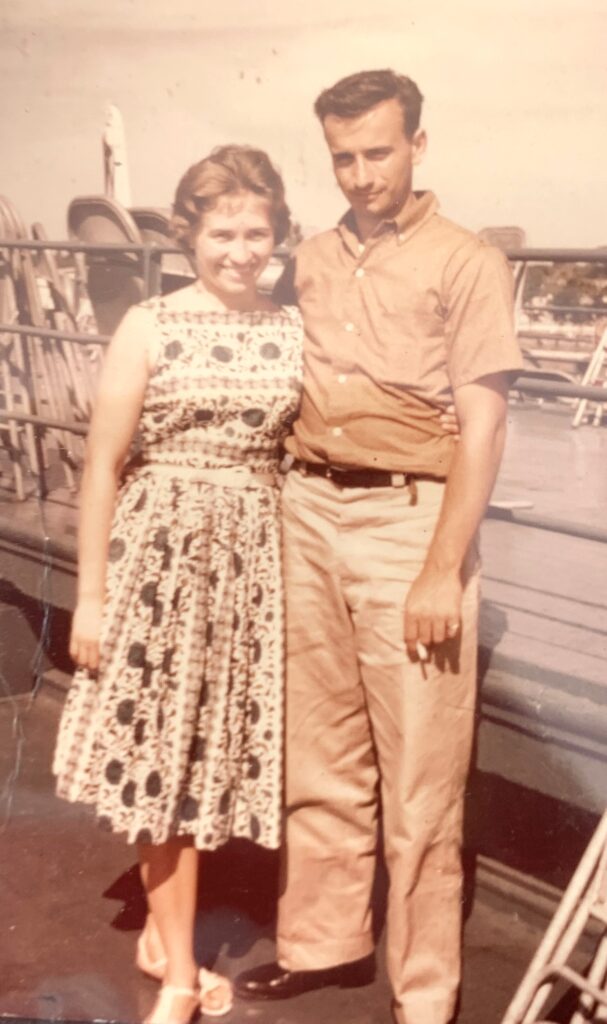
Her mom continued to sew, and Super went to work at the University of Pennsylvania Hospital. She later went to work at Drexel University in the college store. In 1960, she met John Super, and in 1961 they married. He had a career in sales, selling packaging, and the couple had one son, David.
Her sister, Irene, married a year before her and settled in Pennsylvania. Their mother would later move in with Irene and her husband. Super lived in Yeadon, Delaware County, until they bought a house and moved to Abbington.
In 1987, they moved to Cape May Court House. She was widowed in 2015.
Despite having a relatively good life in the United States, Super said she never got over the loss of her nation due to the war.
“I was born in Ukraine and I became a U.S. citizen, and I will become a citizen of heaven,” she said, invoking a faith instilled as the child of a minister.
After years in America, she said, they were always looking for her father and brother in Ukraine.
She said they eventually found out both were alive, and her brother was married with three sons. After a few years they heard that her father died at the age of 88. In 1994, her brother immigrated to the United States, where they still live.
Contact the reporter, Christopher South, at csouth@cmcmherald.com or call 609-886-8600, ext. 128.