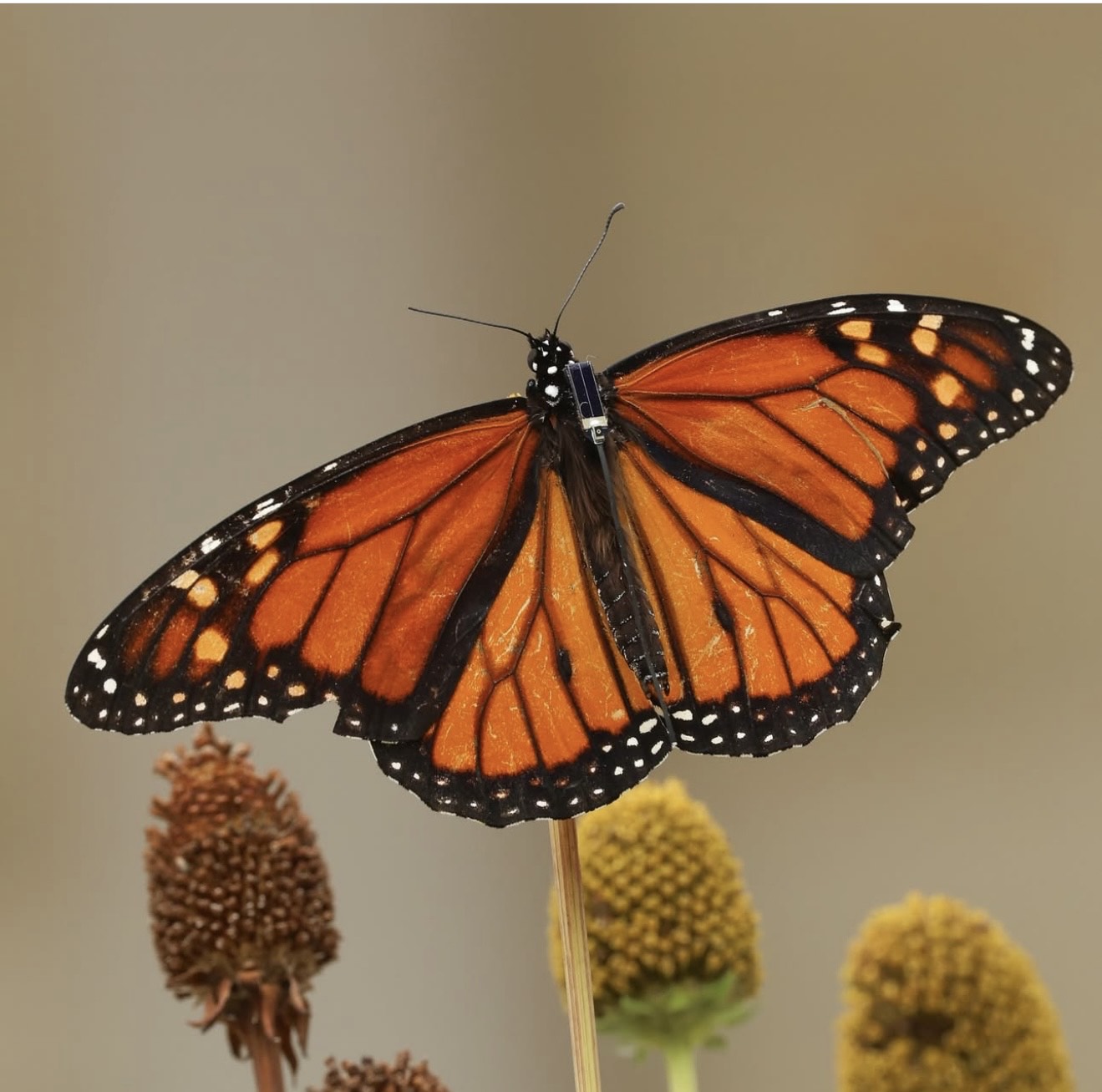
What: An expert from the Monarch Butterfly Biosphere Reserve in Mexico will give an update on monarch conservation, and monarchs will be tagged in a live demonstration
When: Saturday, Sept. 27 at 2 p.m.
Where: Cape May Point Arts & Science Center, 101 Lehigh Ave, Cape May Point
The Cape May Point Arts & Science Center (CMPASC), in partnership with Project Monarch, proudly announces a historic event celebrating the cultural, ecological, and scientific importance of monarch butterflies.
On Saturday, September 27, the community is invited to experience two extraordinary programs:
● 2:00 PM — Monarch Tracking Demonstration
● 3:00 PM — Featured Talk with Estela Romero Vázquez
Estela Romero Vázquez, a fifth-generation resident of Angangueo, Michoacán, México, comes from the heart of the Monarch Butterfly Biosphere Reserve, a UNESCO World Heritage site known for its astonishing overwintering population of monarchs. A writer, storyteller, and passionate educator, Romero shares how ancestral Indigenous Mexicans connected with the monarchs’ annual cycles, how decades of scientific research illuminate the butterflies’ ecological importance, and how communities in Angangueo are raising the next generation of guardians to protect their habitat.
This event also marks the first time monarch butterflies can be tracked in real-time across North America, thanks to pioneering transmitters developed by Cellular Tracking Technologies (CTT), based in Cape May County. These lightweight Bluetooth transmitters—already successfully tracking hummingbird migrations—will now provide unprecedented data on monarch migration, from the U.S. all the way into Mexico.
“This is one of the most dramatic animal tracking projects in the world,” said Sean Burcher, Director of Science and Senior R&D Scientist at CTT. “The data we’re collecting will far surpass anything previously known about monarch migration.”
Estela Romero’s visit, combined with the launch of this cutting-edge tracking initiative, represents a unique convergence of cultural heritage, environmental education, and scientific innovation.
The program is free and open to the public. Donations are welcome. No pre-registration required.