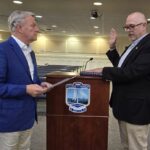

All six candidates for West Cape May’s Board of Commissioners agree: The borough is undergoing dramatic change as development booms and contrasts with the town’s long-standing rural character.
Two teams of three, and one candidate running on his own, are vying to oversee that change, as all three commission seats are up for grabs in the Nov. 4 election.
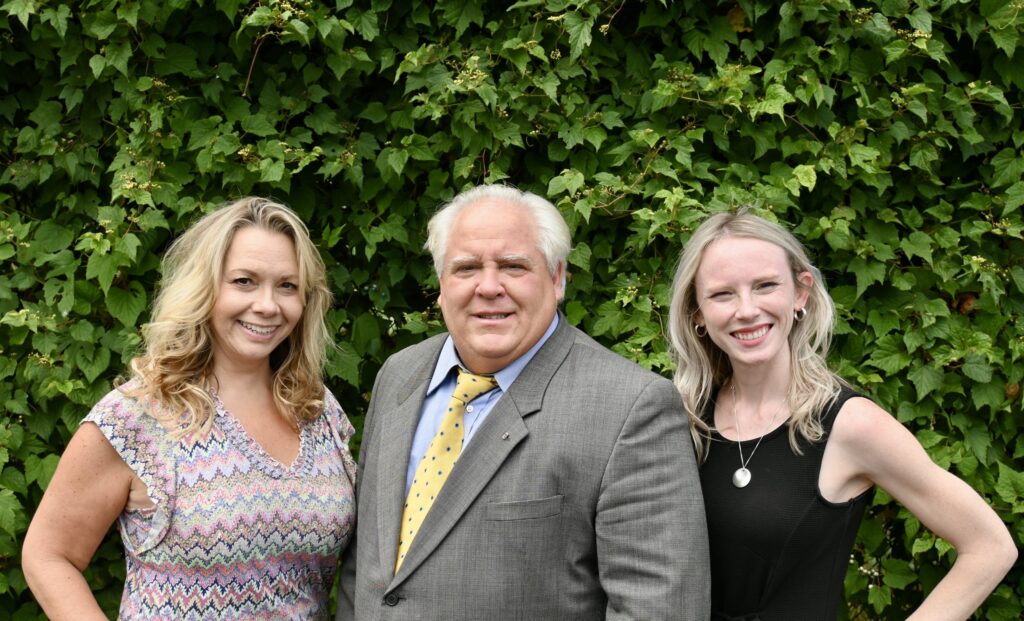
One slate, “Team Ready to Serve,” has Willow Creek Winery director Hamilton Wilde, incumbent commissioner and retired Jersey City firefighter Giacomo “Jack” Antonicello and retired Johnson & Johnson clinical researcher Dawn Vitagliano.
The second, “Team West Cape May,” brings together incumbent Deputy Mayor George Dick, Ellie McDevitt, the owner of Ellie’s Bakery, educator, and a federal consultant, and Susan Hoffman, a retired vice president of Lehigh Valley Health Network.
Running alone is Joseph Gilmartin, a local real estate broker, who did not respond to the Herald’s request for an interview.
The third open seat is now held by Mayor Carol Sabo, who is not running for reelection; she is seeking a 1st Legislative District Assembly seat.

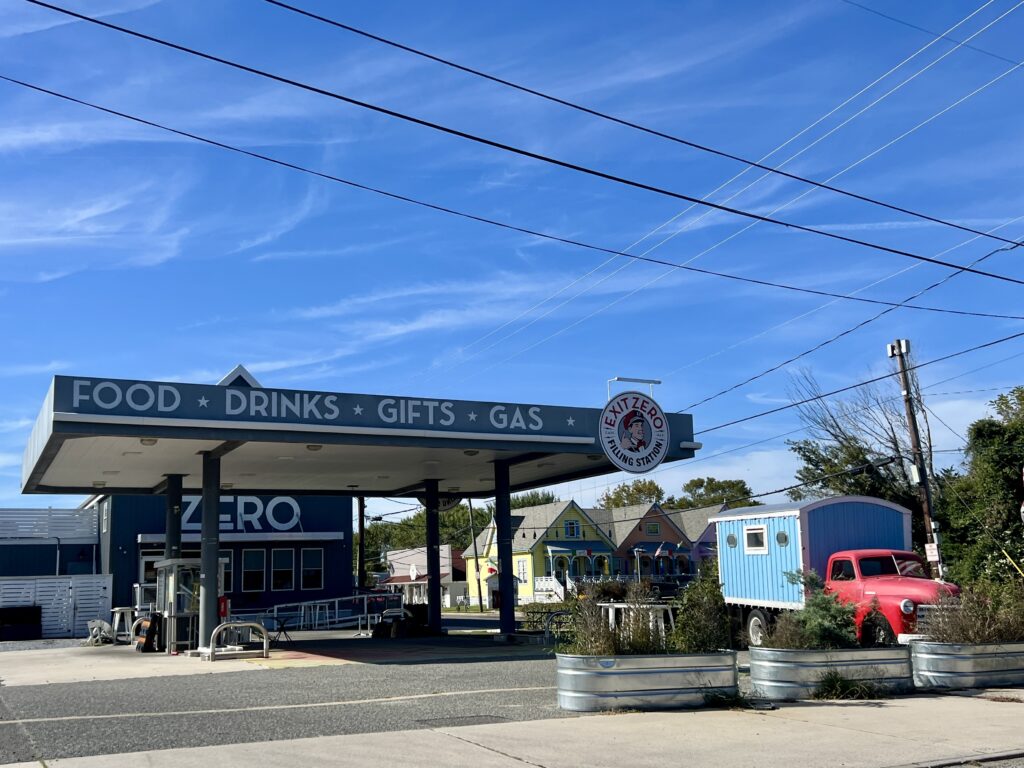
The city’s water usage has increased substantially in recent years as new houses, often much larger than the ones already in place, are built across the borough. Exit Zero Filling Station, one of the most visible businesses in the borough, closed this year. The first cannabis store in Cape May County opened in the borough two years ago.
Team West Cape May said that their record of proven leadership can guide the borough through changing times. Team Ready to Serve said that there is a lack of leadership regarding development in the borough’s most visible locations.
McDevitt warned about overbuilding: “On my street, they tore down one house and replaced it with three … it won’t be the West Cape May I loved when I moved here in 1987. I think that’s the biggest issue in the broadest possible terms.” Dick said the borough should help shape replacements for closed businesses and keep development “uniform” and “planned.”
She said that water usage needs to be carefully monitored. The water situation, however, is largely out of the commissioner’s control. The bottleneck is Cape May’s aging desalination plant, slated for major upgrades but still waiting on over $40 million in federal funds that have been approved but not yet appropriated. McDevitt said that, based on a survey of water usage among homeowners in the borough, water usage is slated to increase by over 400% if the same rate of development continues.
Dick said that a roundabout is currently planned in the section of town – by the CVS – that overlaps Myrtle Avenue, Park Boulevard and West Perry Street. This infrastructure change, which he said is in the works with coordination from the county, would help guide traffic through what is at present one of the most confusing intersections on the island. The traffic project was first proposed in 2012.
Dick said that under his leadership, the borough has installed radar signs and worked closely with the county on road safety improvements on Broadway, one of two main entry points onto Cape Island. He said that bike traffic should be directed off Broadway onto parallel routes to reduce the amount of bike and pedestrian traffic forced onto one of the busiest streets in town. He said that he has both the plan and a record of follow-through to make meaningful infrastructure changes to improve pedestrian traffic flow.
Hoffman said that public spaces like parks and preserved land can help expand the public’s enjoyment of nature in West Cape May. She said that her team will prioritize “public spaces, green spaces, open space, more parks – the things that really make a community special.”
Dick said he and his team would continue to pursue a pedestrian bridge that creates a route for bikers and walkers to access the Mount Vernon Beach. “If we get DEP permits, the bridge on First Avenue into Cape May would take you right to Mount Vernon Beach … that gives residents a way to reach the beach without crossing Broadway,” he said.
Team Ready to Serve also has a plan for downtown. Vitagliano said that the business hub on Park Boulevard, which houses Ostara’s Coffee House, Animal Outreach and other businesses, should be connected via sidewalk to the rest of the town.
She said: “One of the issues we brought up multiple times with one of the other commissioners is that there’s no sidewalk to cross Park Boulevard and run across the street. I would love to see a sidewalk on the parking lot on that side, and tie it into one of the side streets.”
She also took a stance against condo-heavy redevelopment: “We don’t want condos there; we want businesses.”
Vitagliano spoke about how dangerous it is for bikers to enter town and said that a bike path by Duckie’s Farm Market – directing bikers from Broadway onto Canning House Lane, down a service road that could be developed for bike access, and onto Park Boulevard – could keep bikes off one of the most congested roads in the borough.
Wilde said that there is overall a lack of a master plan for the business district, and that her team could work together to make the area more pedestrian-friendly. She said her breadth of experience working at Willow Creek Winery, which Antonicello described as one of the most beautiful and best-executed projects in the borough, gives her an eye for attractive development.
Wilde said that her youth gives her an edge over her opponents and that there is a real risk of over-development. “Realistically, I’ll be the only candidate that will be here in 50 years,” she said. “I want to have a family, I want to raise kids here. I have to take a look further down the road than some of the other candidates.”
Antonicello said that his history as an arson investigator, fire official and fire captain at his old home in Jersey City has prepared him to work on complex projects. His jobs in the city, he said, required coordination on the municipal, county and state levels.
Vitagliano highlights her 35-year career managing multimillion-dollar clinical trials at Johnson & Johnson, saying her expertise in budgets, process improvement and team leadership equips her to bring efficiency and fiscal discipline to borough government.
In interviews, both teams agreed on many policy points but disagreed on how the town is handling public communication, transparency and finances.
Ready to Serve candidates took general issue with the current commission, claiming they have dodged questions from residents and engaged in “lawfare,” according to Vitagliano. She said that the borough, in 2023, sued petitioners who challenged a zoning ordinance permitting cannabis shops to open on Sunset Boulevard.
Her teammates agreed that the current commission is hostile to outside ideas, like the one presented in the petition against the cannabis shops. “I’ve been to meetings where taxpayers and residents are mistreated by public officials. I’ve seen people mocked for asking certain questions,” Wilde told the Herald.
Antonicello said that he has been treated unfairly and has been singled out by the other commissioners. “It hasn’t been nice,” he said. “There are things that have been wrong for so long that they’ve become habit … It seems that the commission says they’re gonna do one thing, and they do another,” he said. “It needs to be very clear. A lot of things are very unclear.”
Wilde said that this lack of clarity extends to zoning decisions. She said that Team Ready to Serve will focus on making zoning more user-friendly. Residents, she said, feel frustrated and sometimes hopeless when trying to make changes or improvements to historic homes. Ready to Serve painted the borough’s Historic Preservation Commission, a board that some residents must work with to make changes to properties within the borough’s historic district, as opaque and difficult to work with.
She said that “nobody is happy” when residents go to zoning meetings and Historic Preservation Commission meetings. “Because even if they get what they want, they’re already $15,000 in the hole between architect, lawyer and engineer,” she said.
Dick, on the other team, said that he has made great strides to make the town more communicative with residents. He referred to the Herald’s transparency scorecard, which ranked West Cape May as one of the most transparent municipalities in Cape May County.
He said that the borough’s commission meetings take place outside of regular working hours so residents can easily attend and are livestreamed and uploaded to YouTube within 24 hours, and that all meeting documents are available before the meeting for residents to review.
Dick said that the other team is running a campaign of negativity and bombast. “The reason people use negativity is they have nothing to run on,” he said. Hoffman added to this, saying that their team is running a positively-driven campaign because they are fighting what they see as a stream of misinformation and misdirection.
Antonicello, Wilde, and Vitagliano, on the other side, generally characterized the current borough government as hostile to outsiders. Antonicello said that he is working against a stacked deck with the current commissioners. He said that city appointments are often made on the basis of “who knows who” instead of merit.
The structure of West Cape May’s commission government means that elected commissioners have a more active hand in day-to-day governance compared to neighboring Cape May, which operates under a council/manager structure.
The commission structure requires close coordination between commissioners. It also means that the functions of governance can slow down if commissioners don’t get along.
Candidates are running together as teams of three, but the three people with the most votes will be seated even if they did not run together.
Contact the reporter, Collin Hall, at 609-886-8600, ext. 156, or by email at chall@cmcherald.com.