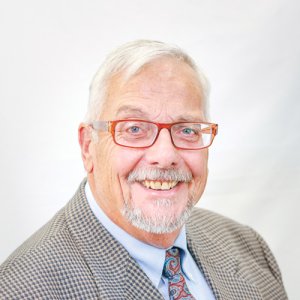

Two Democrats are challenging the incumbent Republicans for their 1st Legislative District seats in the state Assembly in the Nov. 4 election.
The challengers, who won their nominations in a three-way primary contest, are Carolyn Rush of Sea Isle City, a retired engineer, and Carol Sabo, mayor of West Cape May.
The incumbents, Antwan McClellan, chief of staff in the county Sheriff’s Office, and Erik Simonsen, recently retired athletics director for Lower Cape May Regional High School and a Lower Township resident, have held their posts since 2020.
Democrats currently hold a 52-28 edge in Assembly seats. The Senate representative from the 1st Legislative District is Republican Michael Testa.
The Herald interviewed the four Assembly candidates on their views of the issues and their backgrounds.
Rush
Rush began the campaign process with a running mate, Brandon Saffold, who came in third in the June primary. She retired from Lockheed Martin in 2024, where she had been a software engineer, then systems engineer, and finally an engineering manager. She has a B.S. from Montclair State University in computer science.
Rush said she took early retirement and reassessed her priorities, feeling the need to “bring some civility back to politics.”
“We are way too divided. It’s too much of us against them, and that’s not the way I operate,” Rush said.
She said today’s society has basically two types of people.
“You are either a billionaire or you are struggling to make it through the day or week,” she said.
Rush said there is still a lot of division racially, men still make more than women, and it’s still tough to get housing. She said those who come from generational wealth work to keep other people down, and that education systems are not as good in poor areas as compared to wealthier areas.
She said her vision for health care in New Jersey is to create a single-payer system, and that this system would benefit both users and employers. She has drafted a bill that she would introduce if elected.
Rush would like to see a maternity ward return to the county’s only hospital. She believes the county and the state should provide equitable care for all residents, regardless of income, race, gender identity or geography.
She is working to address homelessness through her 501c3 nonprofit called the Helping Hand Housing Project. Her short-term goal is to buy or lease a vacant structure and convert it into tiny apartments to use for housing, then partner with other organizations for support services. Her ultimate goal is to provide transitional housing leading up to permanent housing.
Rush believes in legal, equitable access to care. This includes fully funding the Reproductive Freedom Act, expanding insurance coverage, and safeguarding patients and providers from out-of-state threats.
She said that as an Assembly member she would stand with military veterans, fighting for policies that support them with access to stable housing, quality health care, meaningful employment opportunities and expanded mental health services.
She said she is a strong believer in renewable energy and would like to see more solar energy being employed. She said she could support small modular (nuclear) reactors, but wants to see a plan for disposal of its waste.
Rush said she believes in the concept of “guardrail capitalism” – an economic system where people aren’t left behind. This system, she said, would not punish success, but would ensure everyone has a fair shot.
On gun control, Rush said she belongs to Moms Demand Action, and she went to Trenton and fought for legislation that would prevent guns in certain circumstances. She said New Jersey actually has a low rate of gun violence, and she would like the legislation the state has to stay in place.
Rush also believes in providing immigrants rights, saying she supports the Immigrant Trust Act. She said the concept of a sanctuary city is to make people not afraid to come forward if they are a witness to or victim of a crime. She said she would like to see comprehensive immigration reform at the federal level.
“The economy depends on immigrant labor. We need to have a pathway to citizenship,” she said.
McClellan
McClellan was born and raised in Ocean City. He is a 1993 graduate of Ocean City High School, where he played various sports. He went on to study communications, hoping to become a sports broadcaster, at Virginia State before transferring to Old Dominion.
He went to work for the Cape May County Sheriff’s Office in 2017 and was named its chief of staff in 2022.
His interest in politics began in Ocean City in 2010 when he was asked and encouraged to run for the school board. He was elected and served until 2012, when he was elected to Ocean City Council, He stayed until 2020, when he began his first term in the Assembly.
McClellan said he went from serving on a seven-member council where he knew everyone to an 80-member Assembly – working with a 40-member Senate – and knew very few of the members.
He said that, since 2020, he has learned the different facets of the two houses and the value of making an impression on the governor. He serves on the Tourism Committee and the Appropriations Committee.
He said the 1st Legislative District is the largest in terms of land mass. Serving in the Assembly has made him more familiar with the district, which includes Cape May County and parts of Cumberland and Atlantic counties. Those areas, plus Salem and Gloucester counties, he said, are part of what his legislative team calls “the real South Jersey.”
“Some people think of Trenton as South Jersey – it’s not,” he said.
One of his proudest moments as an assemblyman, he said, was his work on creating the Black History Heritage Trail, which now has 32 sites. The first historic marker was placed at the Franklin Street School in Cape May on June 11. He sees the trail as another way to promote tourism in the county and state.
McClellan said that in his capacity with the Sheriff’s Office he communicates with many other members of the state sheriffs association. He said that he has helped to establish a process for hiring sheriff’s officers that allows applicants to bypass the Civil Service test and be hired off the street.
In addressing the cost of electricity in New Jersey he referred to the governor’s energy master plan as a “disaster” plan and not a diverse energy plan. He said that Holtec International is manufacturing small modular (nuclear) reactors, which it is exporting because New Jersey can’t use them.
McClellan said, absent other forms of energy, his legislative team is trying to help constituents use energy more efficiently.
He said that, as a Republican and member of the political minority in the Assembly, he participates in conversations to stop bad legislation, noting that what is good for Paterson might not be good for Ocean City, for example.
“We need to figure out how it will affect people,” he said.
Sabo
Sabo is the mayor of West Cape May, a position she has held for eight years, and she has lived in West Cape May for 38 years.
She spent 15 years working with the Division of Youth and Family Services, now called the Division of Child Protection and Permanency. After earning a master’s degree she went to work with the Cape May County Special Services School District until she retired in 2019.
“I have always been active politically,” Sabo said. “Even with social work, that is what we do, we advocate for people, so to be politically active is not a far stretch.”
She doesn’t have any doubts about her ability to do the job of a member of the Assembly. “I’m very familiar with the legislative process,” she said.
Sabo said she believes it is more important than ever that Democratic voices be heard in South Jersey. She said the values of the Democratic party, which in part are inclusion and service to the community, need to be upheld more than ever.
“We need to serve more people and lift more people up,” she said.
Sabo said she believes in health care for all, saying that should be a function of government, and that profits should be left out of health care. She said health care should be a universal right, not just for people who can afford it, and that people should not have to make the choice to pay for food or health care.
As a former school social worker, she said she is for a strong system of public schools. She said giving money to charter schools waters down the public school system. She said providing a quality education should be a function of government.
Sabo said the state has to make sure municipalities are fulfilling their state-mandated housing obligations. The ability to afford housing, she said, doesn’t “trickle down.” She said while there are wonderful nonprofit organizations working with the homeless, [the government] will “count on them giving until they bleed,” doing nothing at its own expense.
She believes the state is on the precipice of wanting to solidify women’s reproductive freedoms, saying the protection of those freedoms can be taken away.
Sabo said she is taking her campaign to the people, meeting a voters on a one-on-one basis. She has her signs out everywhere and sees more coalescing of the message and the party.
Simonsen
Simonsen has spent his entire life in Lower Township with the exception of his time at Trenton State College, now The College of New Jersey. He graduated from Lower Cape May Regional High School, where he participated in wrestling and football, and wrestled at the collegiate level.
He earned a fine arts degree at Trenton State and a special education certification through Rutgers. While teaching, he earned a master’s in educational administration through the University of Scranton.
He became a special education teacher, coach and later a vice principal before taking the athletics director job at Lower Cape May Regional. He retired at the end of the 2024-2025 school year.
Simonsen began his political career by winning the Ward 2 Lower Township Council seat, which he gave up after moving to Ward 3. He ran again and was elected as Ward 3 councilman. In 2016 he became Lower Township mayor, serving until 2020, when he took the Assembly seat he has since held.
He described Lower Township as a “tight-knit” community. He said there is not the same level of caring in the Assembly for Cape May County and the rest of the 1st Legislative District as for other parts of the state; he called its situation “underserved.”
“That has always been the feeling,” he said.
He said his service in the Assembly has really brought that to light, as well as the partisan separation in the state.
“The 1st District being red doesn’t help,” he said.
What has helped is being involved with and being able to obtain appointments to Assembly committees, such as the State and Local Government Committee and the Education Committee.
“We are established there now,” Simonsen said of his legislative team. “We have positioned ourselves to help in areas that need help.”
Simonsen said he worked on a bill to require colleges to create a program for those with disabilities and come up with a list of opportunities for them. He also wants to reexamine the funding lost to county school districts since 2018.
Asked if the federal government shutdown was affecting New Jersey, Simonsen said not really, but the state was still affected by Covid. He said there are still a lot of state employees working from home, of whom some are doing the bare minimum.
“We might as well have been shut down,” he said.
Simonsen said he also pushed bills that were designed to streamline veterans services. He said numerous veterans have called the legislative district office asking for help navigating the process for benefits without having to wait months and months.
He said he would like to see more done to improve bicycle safety – not just e-bikes – although e-bikes face higher risks. “It’s horrifying seeing kids riding on an e-bike doing 25 to 30 mph, going the wrong way, and wearing no helmet,” he said.
He said of the legal sale of cannabis: “We rushed it through and now are going back and revisiting it.”
Regarding the big increases in utility costs, Simonsen said the answer is more kinds of energy.
“We need to get more sources of energy up and running,” he said. “I’ve got solar, which I am for, but we have to combine it with other types of energy production – to create a buffet.”
On beach replenishment, such as the federal/state project proposed for Five Mile Island in 2013, Simonsen said such projects should be designed on a case-by-case basis, rather than as an island-wide project.
Contact the reporter, Christopher South, at csouth@cmcherald.com or 609-886-8600, ext. 128.