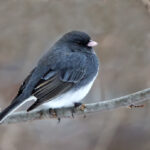
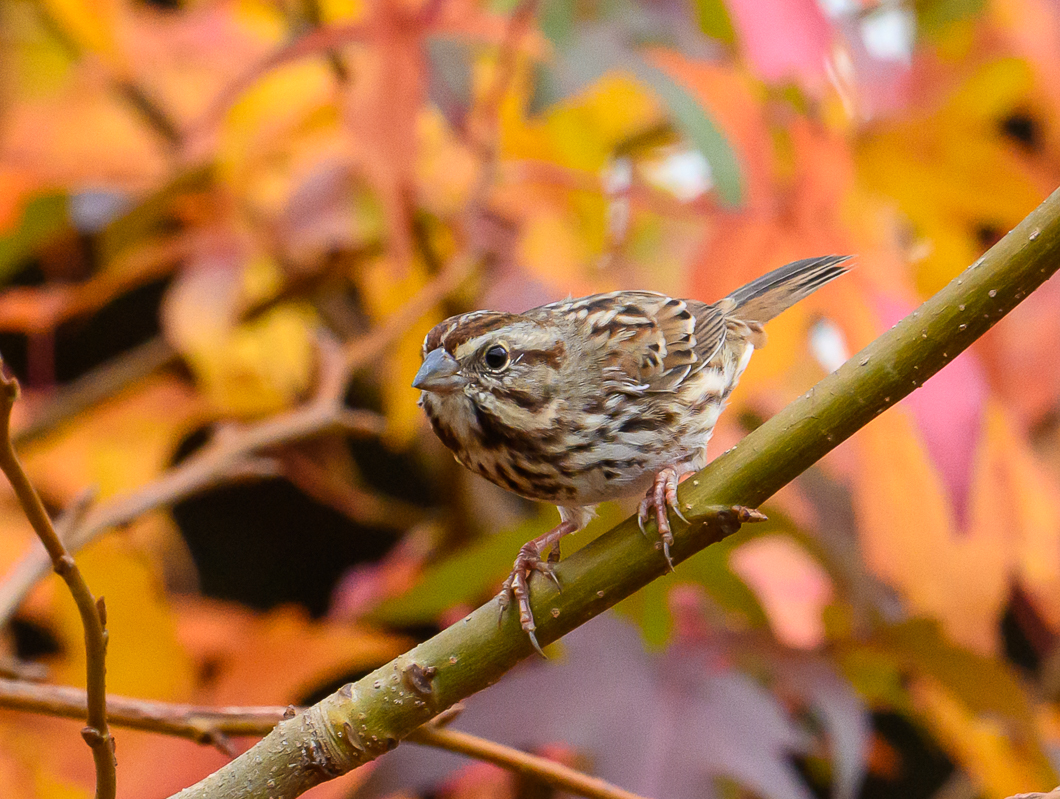
As fall turns to winter, you may notice more and more small, brown birds hopping around in your yard, near puddles, at brushy edges or just about anywhere, really. Sparrows have arrived from their northern breeding grounds and many will stay the winter. It’s a great time to do some comparisons and work on your sparrow ID skills.
Sure, they may get a bad rap, with the most common collective phrase being “LBJ’s,” for Little Brown Jobs. But they’re hardy birds, ready to brave the winter with us and worth a second look as you begin to appreciate their subtle, and not so subtle, differences.
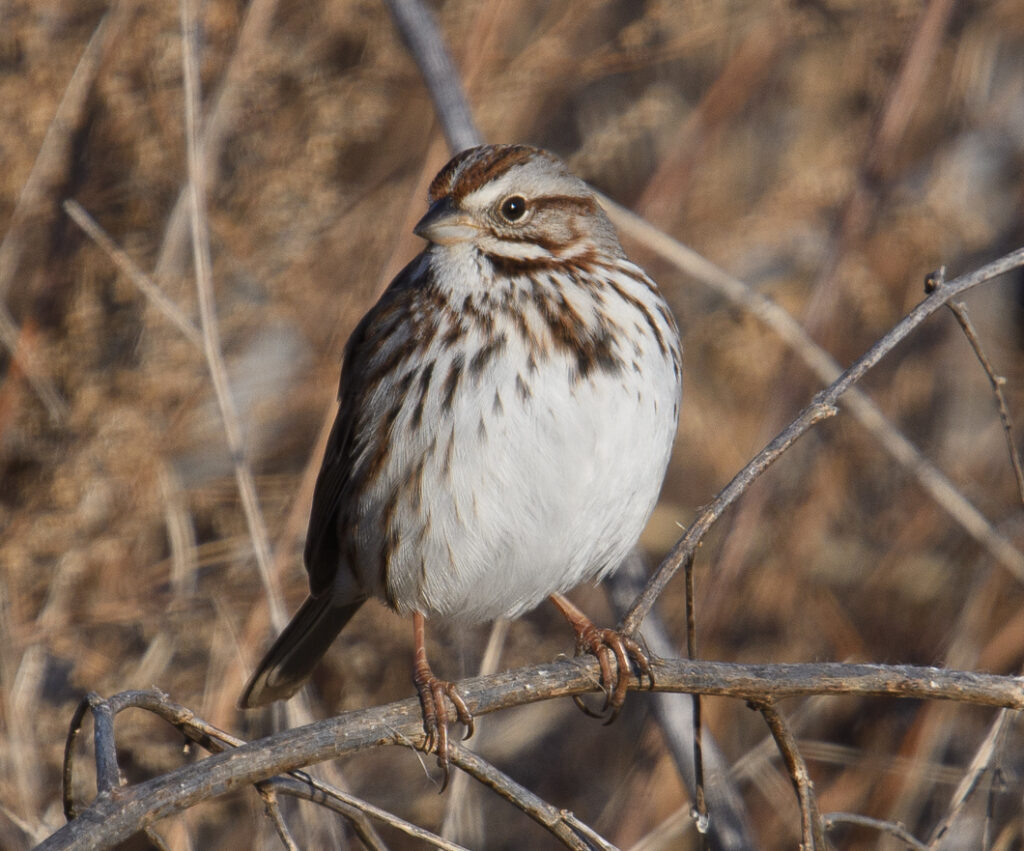
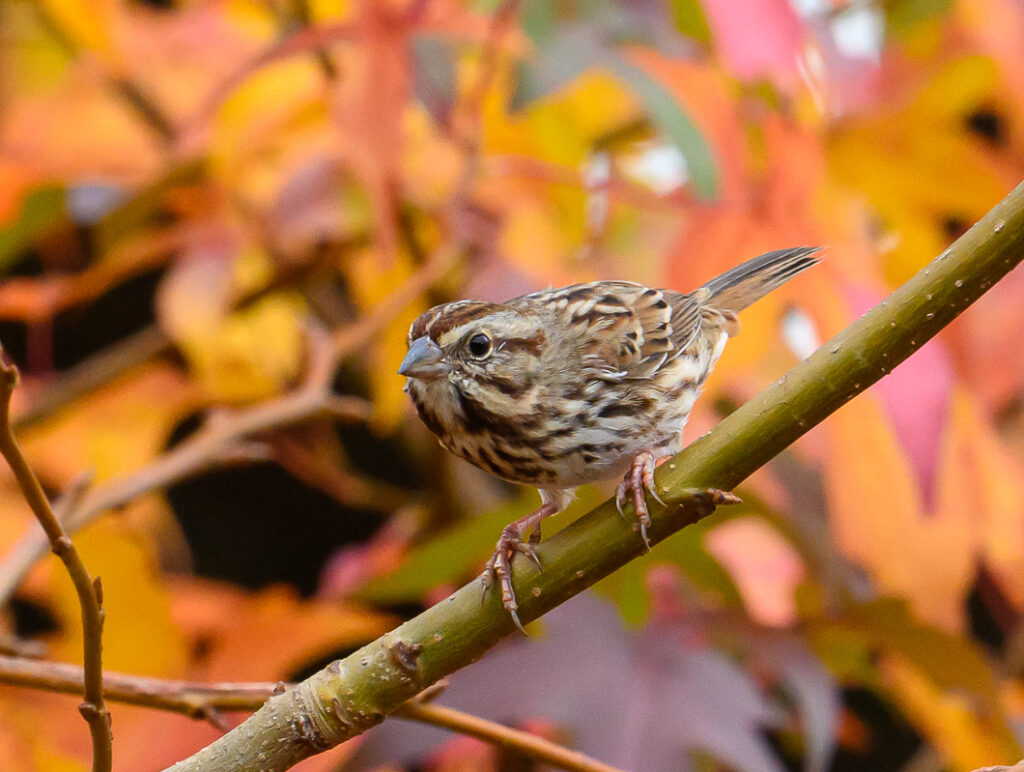
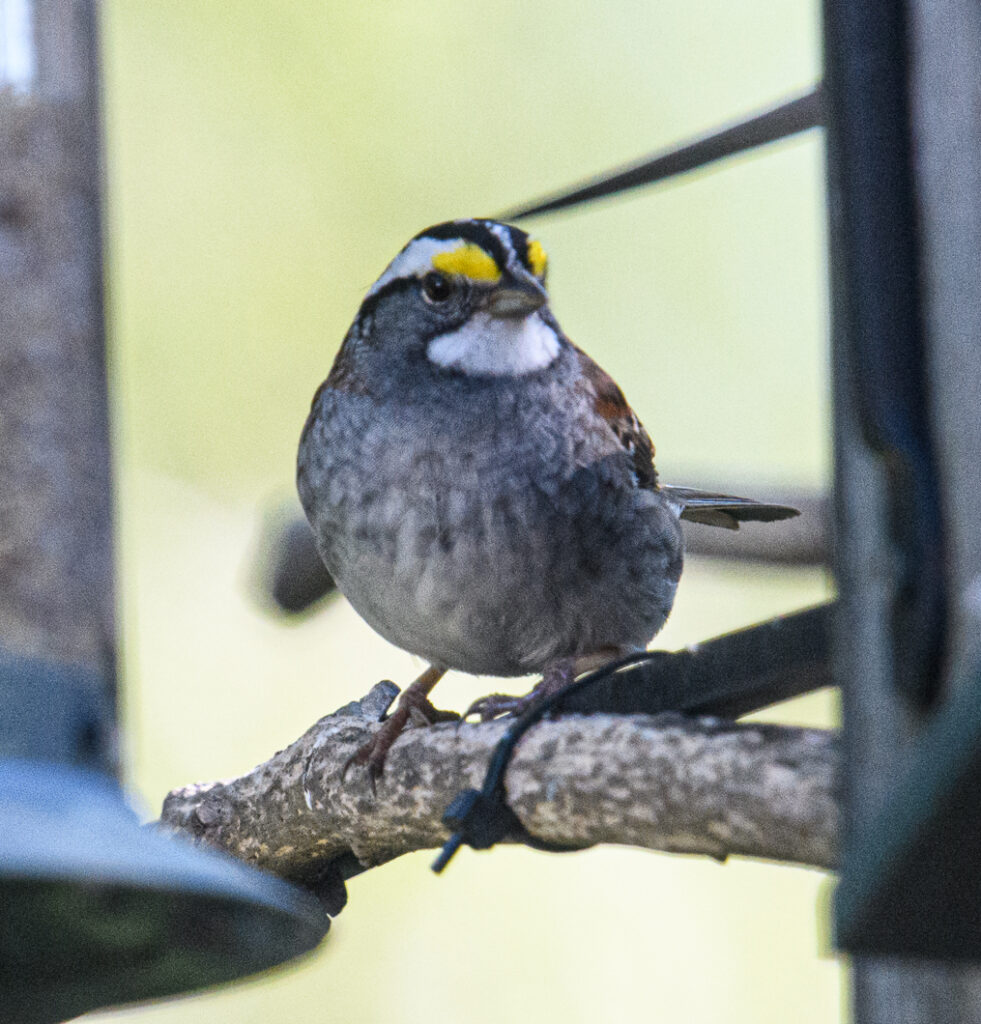
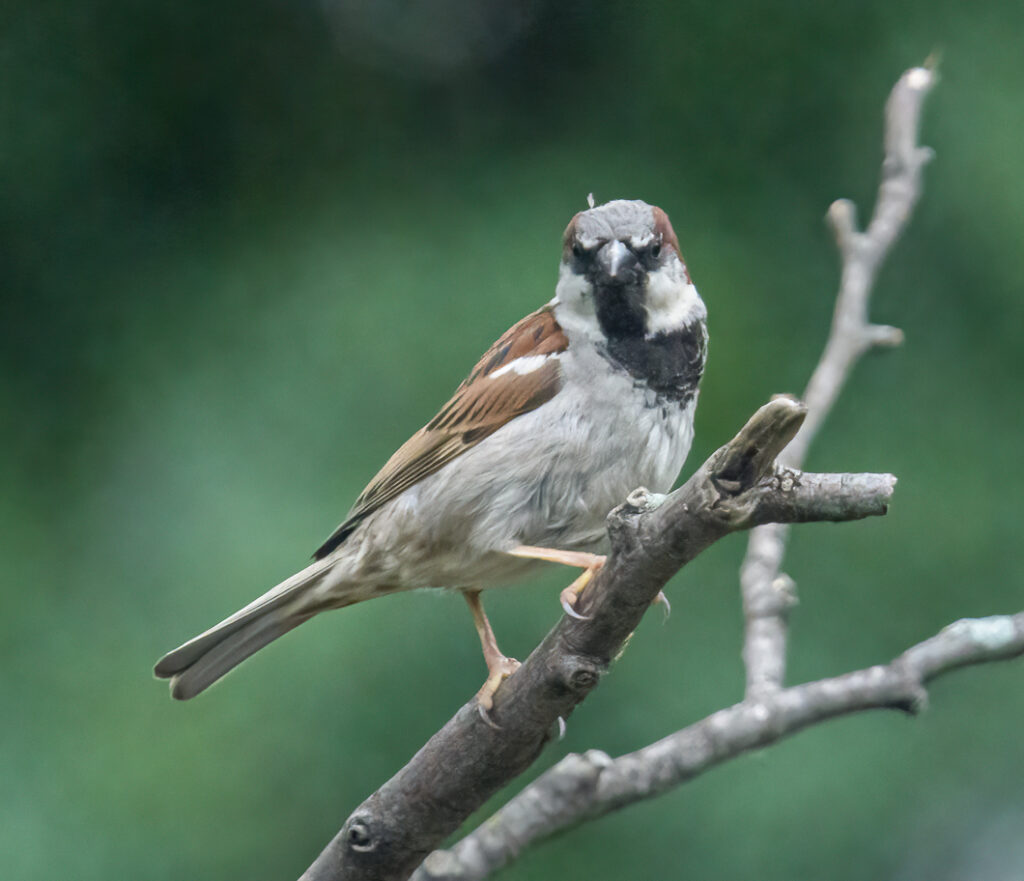
In general, sparrows are stocky small birds that you will see either on the ground or perched on twigs or shrubs. When on the ground, they’re often busy scratching leaves and twigs out of the way in search of a wayward seed. When perched, they may methodically pull seeds out of a dead bloom, or even more methodically empty your feeder! Their short, thick bills are perfect for picking up seeds.
Leaving aside the Dark-eyed Junco, which is indeed a sparrow that’s not brown, let’s look at four common sparrow species you may see regularly in our area all winter. Most can be identified using just the markings on their heads and throats, so we’ll focus there to simplify.
Considering it was just introduced in North America in the 1850’s, it’s remarkable that House Sparrows are in the top ten most common species in the United States. With an estimated population of about 80 million, they favor environments with homes and buildings and that’s exactly how they got their name, Passer domesticus. If you see birds nesting in the curve of the “O” in the lettering on Office Depot, or flying around inside Lowe’s, it’s most likely a House Sparrow.
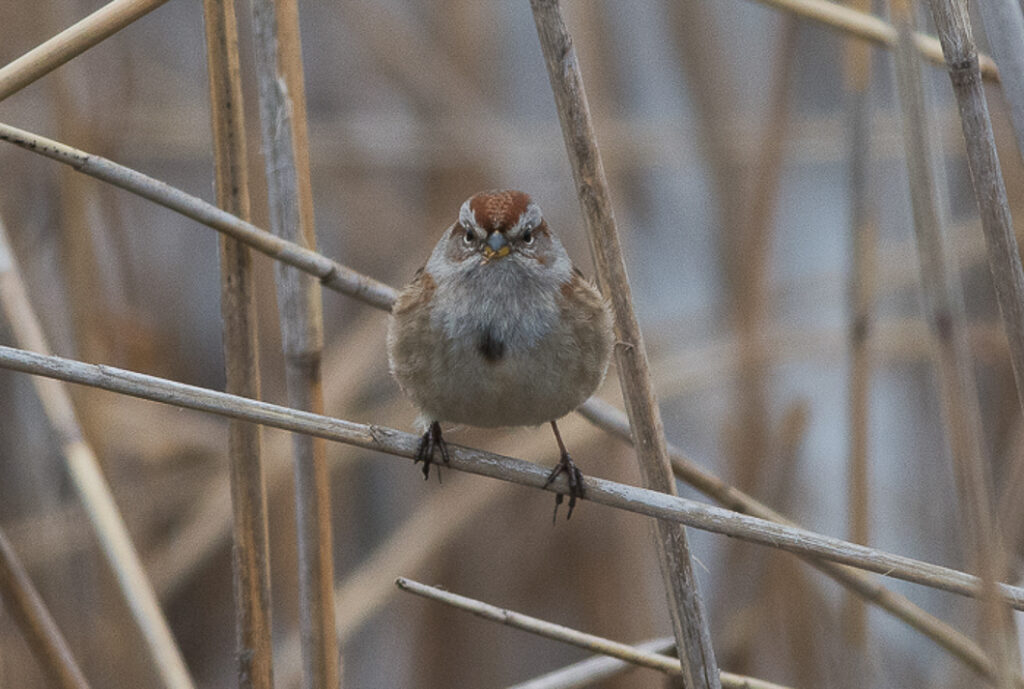
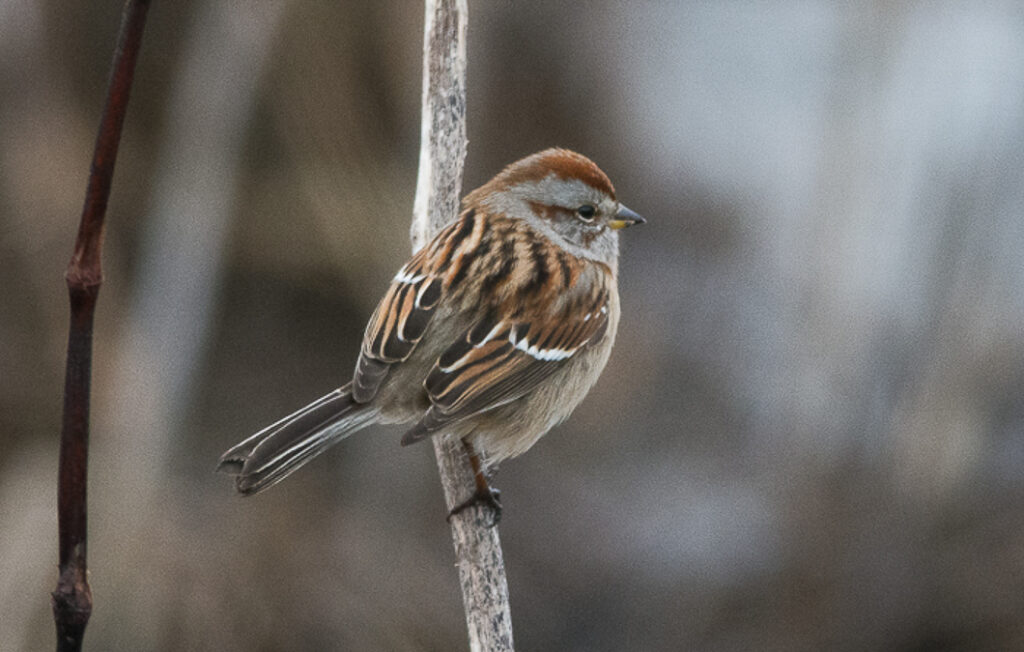
Male House Sparrows have a distinguishing black throat that extends to a bib. They have a deep chestnut head with a grey crown. Females are overall lighter brown with a faint eye stripe, and you’ll usually find them in the company of males.
Song Sparrows sport light colored heads with russet stripes along their crowns, as well as through their eyes and down from the corners of their mouths, like a moustache. They also have a small white patch on their throats. With rusty streaks on their backs and fronts, look for the overall rusty coloring and especially the stripes on the crown.
Tree Sparrows have rusty caps and eyelines, and bi-colored bills, with the lower part being yellow and the upper black. Another good ID mark is a black dot at the center of the chest, which lacks any of the streaking seen in many other sparrows.
And lastly, a true harbinger of winter, the White-throated Sparrow has a bold white throat patch that stands out against its grey face and breast. Bright yellow spots between the bill and eye give way to white stripes right beneath black and white strips across the crown. Many birders mark the arrival of the colder season when they hear the song of the White-throated Sparrow, “Old Sam Peabody, Peabody,” or “Sweet Canada, Canada.”
Master these common species, and you’ll soon find others; as in, “One of these things is not like the others.” Eighteen species of sparrows have been seen in Cape May County, so there will be ample opportunity to keep adding to your sparrow checklist. My favorite online resource for bird ID tips and information is allaboutbirds.org, a website developed by the Cornell Lab of Ornithology. In addition to terrific photographs, it also has recordings of bird songs and chip notes, which can greatly assist in identification.
Cape May, Naturally is a twice-monthly column about birding and nature written by a rotating cast of experts at the NJ Audubon.