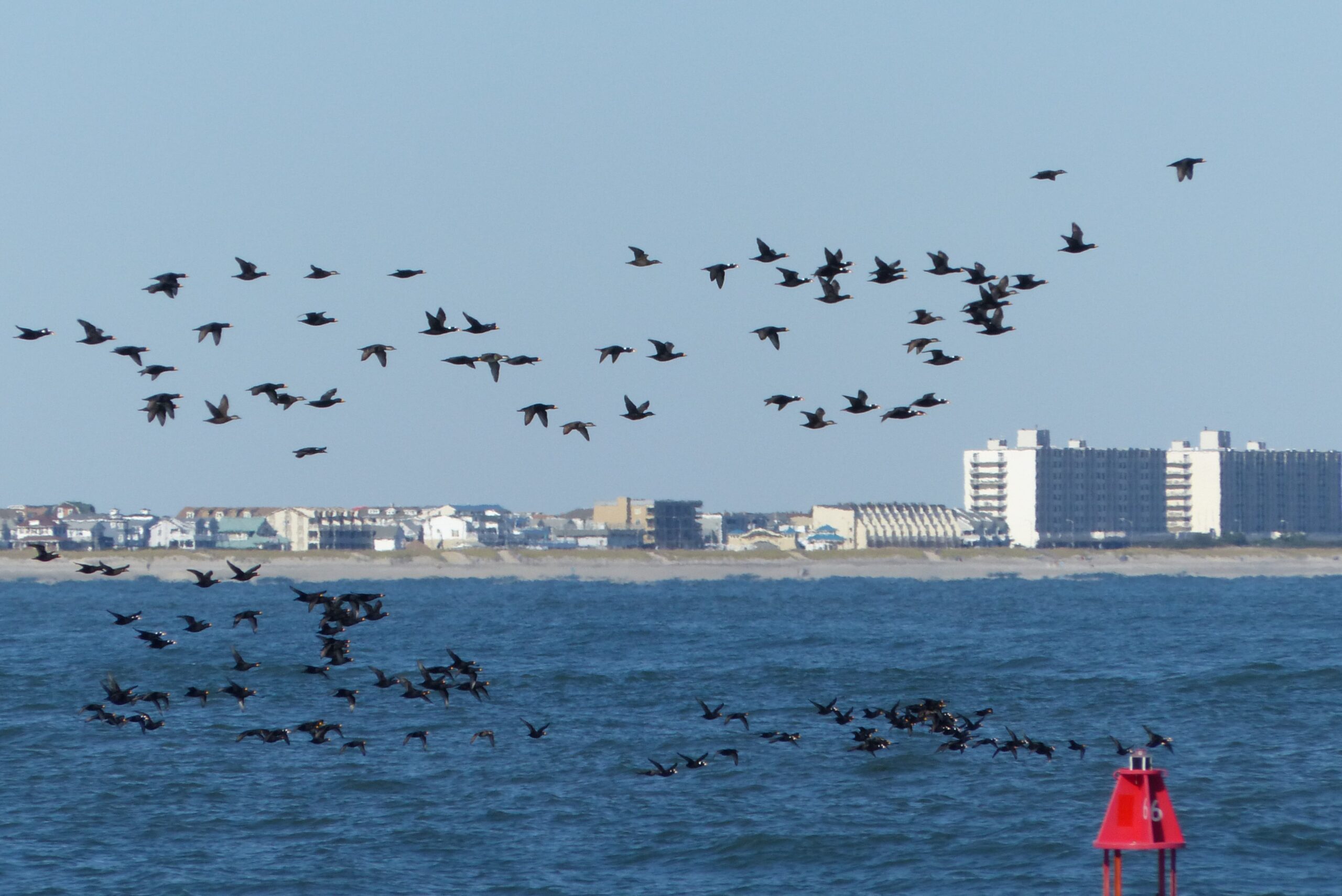
Each fall, hundreds of thousands of waterbirds—geese, swans, ducks, grebes, jaegers, alcids, gulls, terns, loons, shearwaters, gannets, cormorants, pelicans, herons, egrets and ibises—pass by the coastal areas of South Jersey, and there is no better place than Avalon to witness it for yourself. Most importantly, the peak time is now—the month of November.
The Cape May Bird Observatory (CMBO) conducts the Avalon Seawatch on the beach between 8th and 9th avenues from sunrise to sunset, October 1 to December 22, to monitor this incredible movement. The average annual count tops 750,000 birds (and over one million birds four times!). Started in 1993, the count has now surpassed 17 million birds recorded! No other count in the world can compare to what is happening right here in Cape May County.
The top 5 species counted pass by in amazing numbers: Black Scoter, Surf Scoter, Double-crested Cormorant, Red-throated Loon and Northern Gannet. Black Scoters are the most common bird counted each year, averaging over 300,000, with some single days topping 50,000. It often travels with its close cousin, the Surf Scoter, which averages over 135,000. Both of these sea duck species are also common throughout the winter; look for the coloration of the bill and head to help tell these species apart.
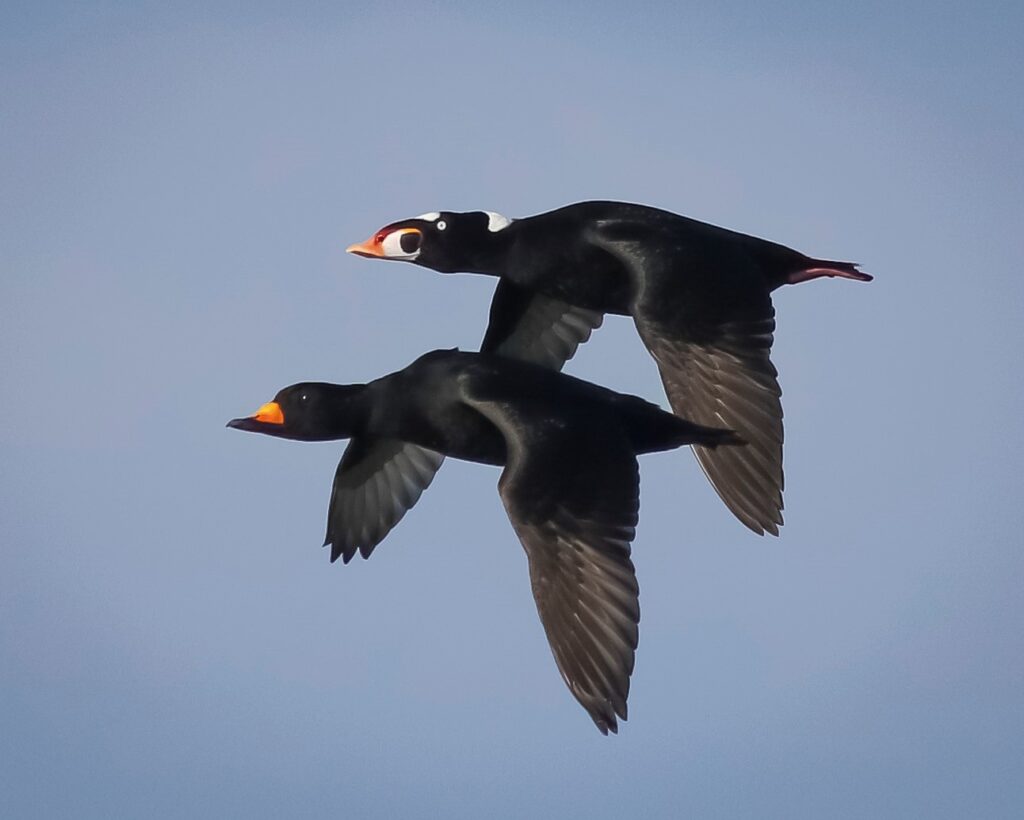
Photo by Peter Riley
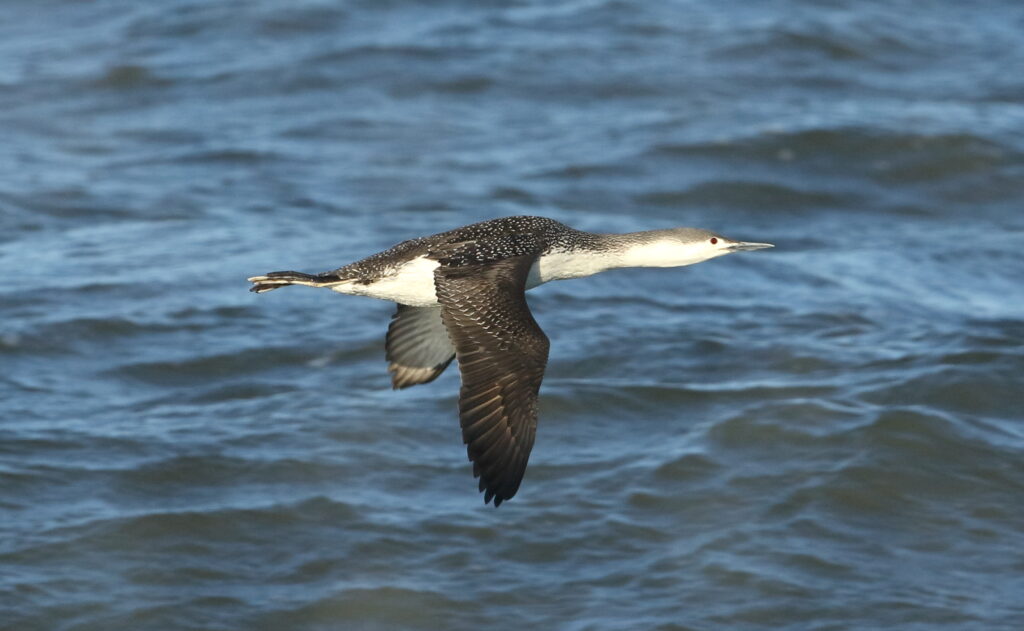
Photo by Dustin Welch
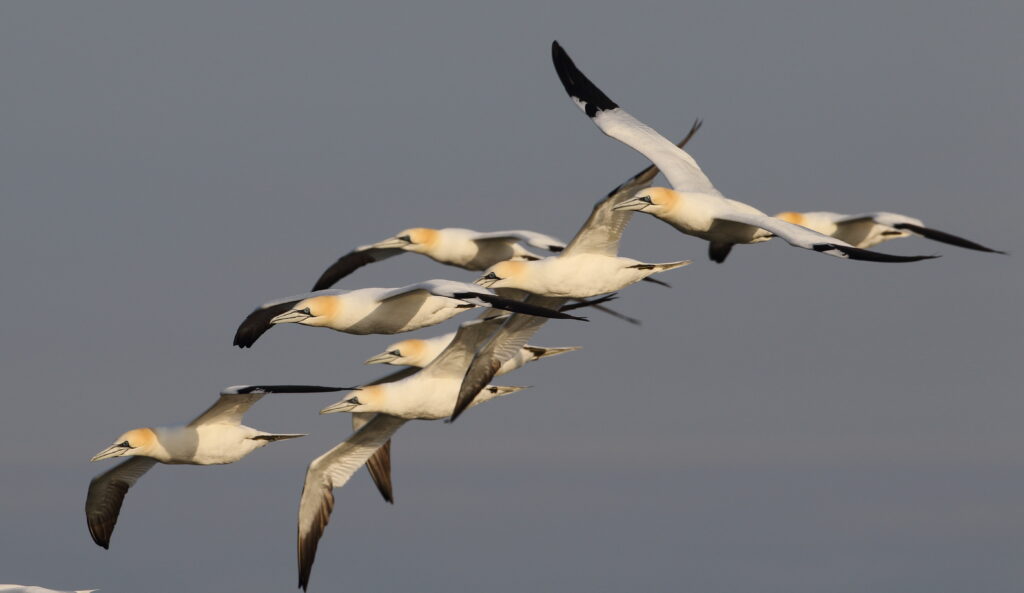
Migrating Double-crested Cormorants are a common sight throughout the fall and average over 150,000 each year. While many people might think Common Loon would be more numerous because of its name, it’s actually Red-throated Loons that are more common, to the tune of 60,000+ each year. Last but not least, the impressive Northern Gannet—a large seabird with a 6’ wingspan—passes by in waves in November, usually surpassing the 65,000 mark. Along with the ~70 other waterbird species encountered at Avalon, it makes from a memorable wave of birds each year.
So, get yourself out to the beach and experience it for yourself! The Avalon Seawatch is open to the public and made possible through the generous support of the Borough of Avalon. Visit the Cape May Bird Observatory’s Northwood Center, (701 East Lake Dr., Cape May Point), the Nature Center of Cape May (1600 Delaware Ave., Cape May), or go to www.birdcapemay.org and check out our full calendar of upcoming programs and information.
Cape May, Naturally is a twice-monthly column about birds and nature in Cape May County. It is written for the Herald by a rotating cast of experts at the New Jersey Audubon.