

Cape May County is one of the top second-home markets in America, but for the people who work here, stable year-round housing – either to buy or to rent – is nearly impossible to find.
The problem has gotten so bad that some of the biggest employers in Cape May County fear for the future of their industries and their ability to staff their workplaces.
Lori Lane is the manager of Two Mile Crab House in Wildwood Crest, among the largest restaurant employers in Cape May County at 250 people during the summer scramble. Lane said that Wildwood might lose many of its small businesses and restaurants if there is no solution to the housing crisis, as has happened in more expensive shore towns like Avalon and Stone Harbor.
“In Avalon, there’s no movie theater, few restaurants, nothing,” Lane said. “I fear that Wildwood is going to turn into that. We have a hard time employing people because they just can’t afford to live here. If the business center of the town goes away, in Wildwood Crest and North Wildwood, there’s really going to be a huge change. There won’t be anything left.”
The makeup of Two Mile’s workforce has changed over time, Lane said, as housing costs have increased. She once employed a mix of foreign workers and Americans, but the ratio has shifted dramatically to favor J-1 visa workers who don’t need to hunt for year-round housing.
“We were losing good employees because their houses were being turned into Airbnb rentals,” she said. “The places our workers depended on year after year are getting turned into luxury rentals.”
The crisis affected her business so dramatically that, three years ago, Two Mile purchased and renovated the Bright Homey Inn on Roberts Avenue to house its summertime employees.
“That would have never, ever been on the agenda if the area had secure housing,” she said.
Susan Klein, 24, works full time as a waitress in Cape May. Her apartment hunt at the shore has dragged on for almost a year. She lives in a small bedroom in her parents’ house in Cape May Point.
“Before I moved here I was able to afford a town house in East Brunswick with a roommate, we had two dogs and two cats living with us,” Klein said. “I was surprised that after a year of living at my parents that I couldn’t find a place.”
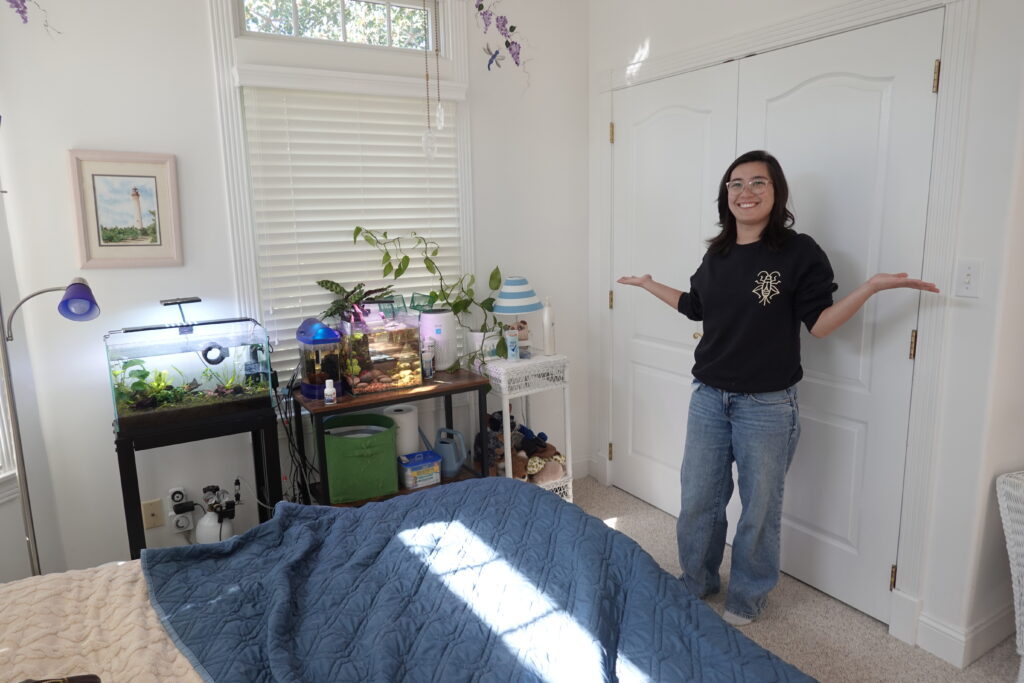
Klein desperately wants to find her own space. Her search is expansive. She looks for places as close as Villas and as far away as Woodbine, but hopes to stay within the county.
“It’s rare that anything comes up for rent that offers permanent housing,” she said. “I have a dog, which only adds to the challenge. The few places within my budget won’t accept pets.”
Klein wants to buy her own home someday but also worries about how difficult that might be.
“I feel like I’m racing to get my finances up or be locked out of buying a house in the area indefinitely,” she told the Herald.
Vincent Grossman, 26, is a pharmacy technician in Wildwood. A fifth-generation local, he hopes to buy a home in Dennis Township or Woodbine, towns he sees as the “last affordable places on the peninsula.”
Grossman said that nearly his entire family, and his entire friend group, faces housing insecurity. Most of his friends live at home even as they are employed full time. The few friends who rent would have nowhere to go if their leases aren’t renewed, or if rents continue to climb.
He lives with his partner in a 650-square-foot studio apartment. Getting the apartment took months of trial and error, but mostly luck.
“We were refreshing Facebook marketplace every day, every second we had time,” he said. “That’s all we could do. We had maxed out all of our options: Zillow, word of mouth. Every single day after work we would sit together and refresh Facebook marketplace. We got lucky and were the first to put in an application for a place in Wildwood.”
The couple’s housing costs average $1,500 a month, but the space is no longer adequate for their needs. This is the third full year of studio apartment life for him and his partner. Grossman is an artist and costume designer outside of his full-time job. They stay put, he said, because there is nowhere else to go.
“I have to work on all of my art on the kitchen table, he has to do all of his business paperwork on the couch, because it’s all just one big room,” he said.
“I feel bad complaining because we’re so lucky to have found a place at all.”
Zachary Mullock, mayor of Cape May, said that the housing crisis harms the city’s ability to hire workers who keep the city running, from its sewers to its police force. Mullock fears that, without housing its workforce can afford, Cape May will become like “other towns on the Shore” that have both fewer businesses and a fraction of Cape May’s year-round population.

Cape May has long grappled with year-round population loss. It has not seen a population increase since the 1980 census, a historic peak of 4,853 people. Today, the city has just 2,768 year-round residents. The city employs approximately 114 people year-round but is struggling to attract and hire teachers, firefighters, policemen and lifeguards as employees retire, quit or move to areas with more opportunity – and cheaper housing.
“It’s becoming harder and harder to hire the people who make our community function,” the mayor said. “Every year, the problem seems to get worse and worse.”
He said that the city’s most recent firefighter hire commutes from May’s Landing, an hour’s drive away. It is common for workers to commute from outside the county as housing costs have ballooned.
“And that’s a really good job with good benefits and good pay,” Mullock said.
The problem exists at both ends of the city’s wage spectrum, from seasonal hires like lifeguards all the way to the position of city manager, the best-paid position within Cape May’s government at roughly $150,000.
“When you’re talking about professionals who you want to attract for that position, a lot of people will say, ‘I have a lot more secure and frankly more affordable areas I can go to.’ And that’s the highest-paid job we have in the city. Even then, at some point, we are going to have a very difficult time filling that role,” Mullock said.
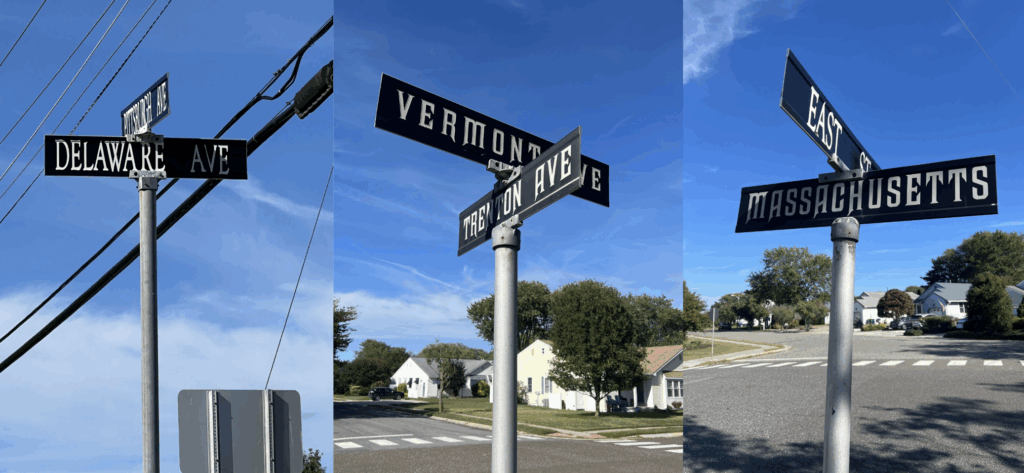
“Buying a house here really starts at a million dollars at a minimum,” he said. “For a long time, you could go over the Cape May bridge and within seven minutes you’re in affordable, middle-class housing. Those same homes have become so valuable on the rental market that they are no longer affordable.”
The situation is similar with rental housing. Micah Yerk, a broker at one of the county’s largest real estate agencies, DeSatnick Real Estate, told the Herald: “We have people who come in this door every single week looking for year-round rentals and come up with nothing. Because they just aren’t out there.”

Yerk said that DeSatnick manages just four dozen year-round rental units, less than 1 percent of its overall portfolio. The vast majority are short-term vacation rentals.
He identified three factors that spurred rental scarcity: an explosion of property values since the COVID-19 pandemic, the conversion of year-round units into short-term vacation rentals, and regulatory changes that make evictions for problematic tenants more difficult and the standards for a legal dwelling more strict.
A 2022 New Jersey law, for example, requires landlords to hunt for lead paint in all of their year-round properties, even ones that have been long occupied.
“Now, any property built before 1978 has to be inspected for lead paint,” Yerk said. “In some landlords’ eyes, that’s a barrier to becoming a year-round landlord. They have to secure a certificate every three years, there’s a significant cost to that.”
But he stressed that the primary problem is the high market value of most homes.
“Those were the ingredients that really turned the problem into superdrive,” he said. “COVID pushed property owners to switch to a short-term rental model.”
This is happening even in places long known as “local spots,” like Villas and North Cape May. The average home in Villas, for example, in October 2025 has a Zillow value of $378,000 compared to $178,000 in October 2017.
“The number of short-term bayside rentals, in places like Villas, has increased dramatically over the past four years,” Yerk said. “Ten years ago, you didn’t see many vacation rentals in North Cape May, and definitely not in the Villas.”
He said that the county desperately needs a greater supply of year-round rentals. “But the only way I see this happening is if the short-term rental model becomes less lucrative for one reason or another,” he said. “We have hit critical mass. I‘m not sure if things will ever go back to the way things were.”
This narrative was echoed at real estate companies across Cape May County.
Cody Menz, a sales associate at Coastline Realty, said his company manages just 10 year-round units.
Diana Flanigan, a rental specialist at Jersey Cape Realty, said that people call all the time looking for year-round apartments. “But we manage just a handful of year-round rentals,” she said. “They have been rented out for years. It’s very rare for a new rental to come up.”
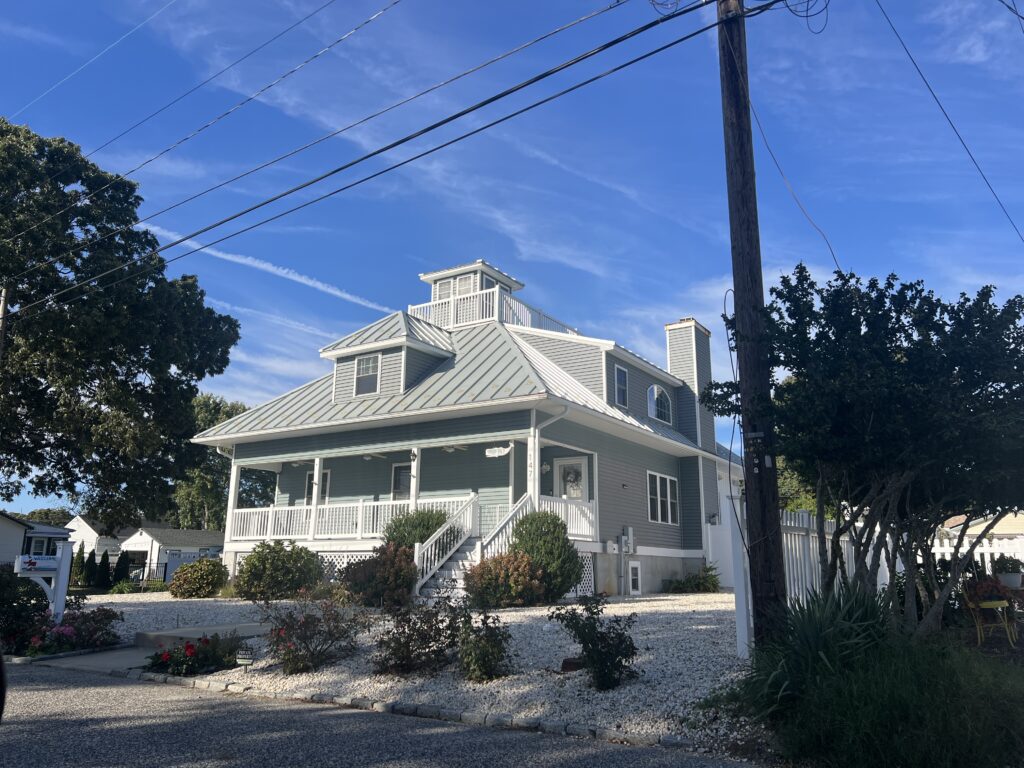
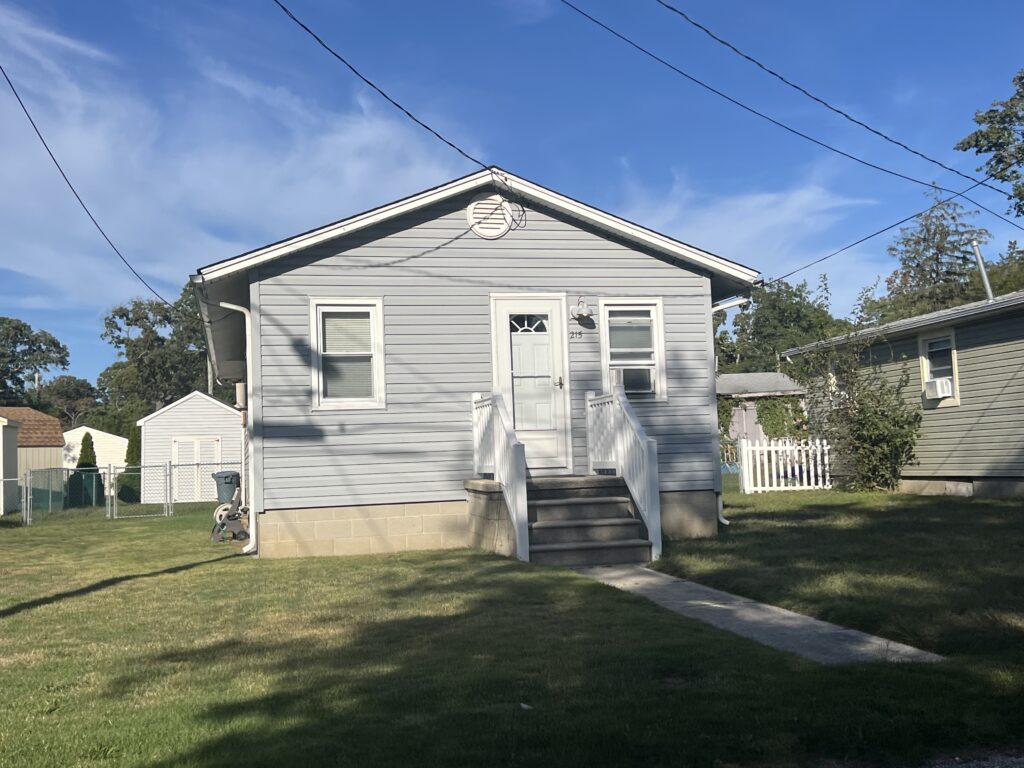
“Landlords are making more money by turning those over to weekly rentals,” Flanigan said. “Many people used their properties as a year-round rental before, but decided to turn them into short-term to make more money.”
Mullock characterized the short-term housing industry as in some ways parasitic to the year-round community.
“Those short-term rentals are on our roads, they are using our EMTs, our recycling, our trash collection, our sewer. All of those services are paid for by the taxpayer, by our residents,” he said.
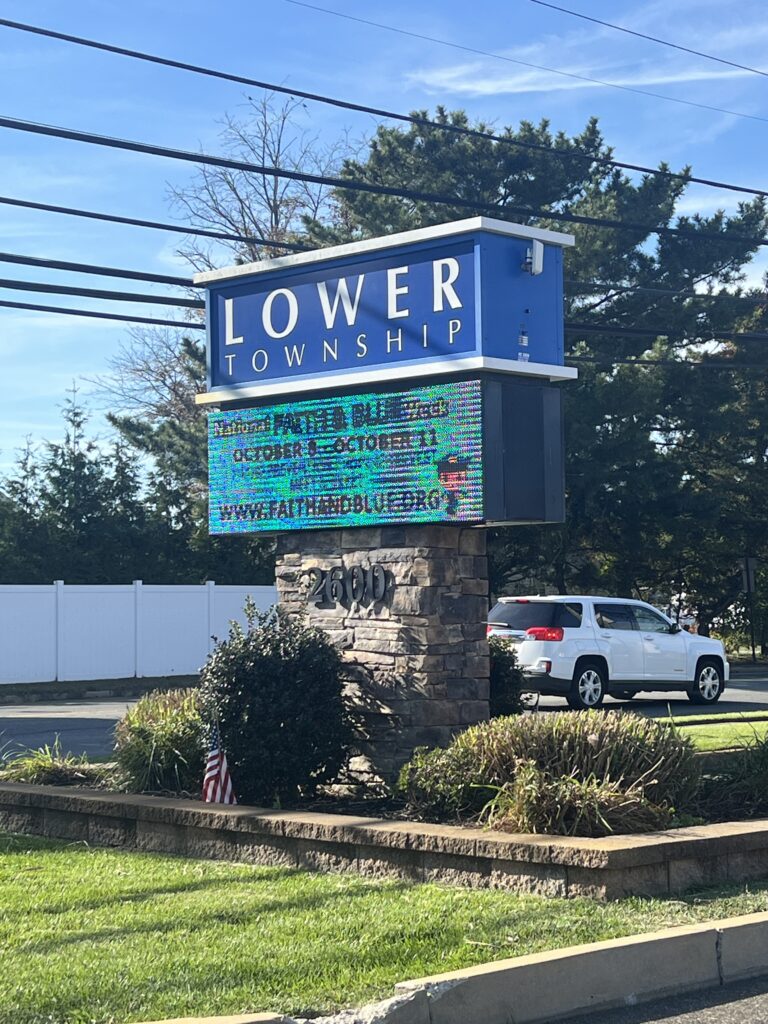
Cape May, alongside Middle Township, Lower Township and Ocean City, has tried to address the problem by levying higher taxes and tightening restrictions on short-term rentals. In 2021, Cape May added an extra 1 percent tax to short-term home rentals.
“There’s nothing worse than Airbnbs that don’t pay their fair share,” the mayor said. “I feel fine cracking down on short-term rentals … I feel strongly that a certain percentage of all transient rentals should go directly to workforce housing. I don’t see any other way to truly solve the workforce housing issue than money.”
Mullock said that the new tax, which sits on top of a 2% statewide occupancy tax on short-term rentals, has raised millions of dollars for the city. “The city is taking this very seriously,” he said. “We want to provide workforce housing. Within the next 12 months we will have announcements on that, using the funds raised from the tax.”
The problem is not just that short-term rentals outnumber long-term ones, but that second homes dwarf primary residences in number and push home values to levels unattainable for locals living around the county’s census median income of $46,000.
The ratio of second homes to primary residences has ballooned since the COVID-19 pandemic. Pacaso, a nationwide real estate company focused on making second homeownership easier through co-ownership programs, ranks Cape May County as the number one second-home destination in America.
Pacaso’s 2024 ranking of second-home destinations found that the Cape has 15 second homes for every 10 year-round residences. Second place went to Gulf County, Florida, with seven second homes for every 10 primary residences.
Denise Venturini-South, a founding member of the Cape Hope homeless advocacy group, said that the ballooning cost of housing has caused a drastic increase in homelessness and housing insecurity for the county’s working population. She worked at Cape Hope for 10 years and said that many of the people helped by Cape Hope were employed full time.
“Employment has become scarce, and the cost of housing has become exorbitant. They do not match,” she told the Herald. “But there’s not a good way to quantify workforce housing problems.”
People who work full time often live on friends’ couches, in their cars or in small spaces in family members’ homes. It is hard to even know how many year-round rentals exist in the county. None of the three real estate agencies interviewed by the Herald could give a concrete number; they only made best-guesses. The way long-term rentals are documented varies agency by agency, and the documentation is not stored long term in the same way home transactions are.
Venturini-South makes a distinction between the chronically homeless – those with severe mental illness, substance abuse issues and other problems that generally keep them unemployed – and workforce homelessness and insecurity. The chronically homeless are documented by HUD data and are eligible for assistance programs, although Venturini-South stressed that assistance on the Cape is rare and underfunded.
But workforce insecurity looks like a thousand different things, she said, from somebody unable to move out of their too-small apartment, to folks living with family, to waiters couch-surfing while they hunt for a long-term housing solution.
“We need more housing of every type except second homes,” Venturini-South said. “We need more apartments like Channels, more senior housing like Conifer Village. They’re not being built, in my opinion, because we live in a seashore community. The cost of the property makes it hard for developers to build housing at a sufficient profit.”
Gary Gilbert is a retired home developer who built year-round housing for most of his career. That means smaller modular homes, typically four bedrooms, aimed at year-round workers. He spent his career building houses in places like Del Haven, Erma and other towns traditionally associated with year-round housing.
“I’ve been building modular homes for years. I sold them in Del Haven, 1,800-square-foot homes, five or six years ago for $229,000 brand new. I recently built one, a 1,600-square-foot home in Rio Grande, that sold for $300,000.”
Gilbert said that second homes in places like Erma are still seen as “deals” for second home buyers who shop with income levels dramatically higher than the average year-round worker.
“The numbers those folks are used to paying for houses is much higher,” he said. “They got a deal in their eyes. But they’re running people right out of town.”
It is still possible to build homes, for a profit, aimed at year-round people, he said. But the margins are lower, and therefore the practice has become less common, he said.
“I never went into the high-end homes. I never felt comfortable in it. It never felt right,” Gilbert said. “I see developers in my industry who used to make $150,000 a year are now making $400,000 or $500,000 a year. It’s hard to go back.”
The problem weighs on nearly everybody in Cape May County. Yerk, at DeSatnick Real Estate, said that the problem is painful even as his industry has profited from higher home values.
“Nobody likes it,” he said. “It’s bad for all of us. We all live here, we all have friends here. It’s difficult to buy a home, and even people with decent double incomes can’t afford a rental. It’s painful.”
Contact the writer, Collin Hall, at 609-886-8600, ext. 156, or by email at chall@cmcherald.com.