
Perhaps this is a familiar scenario: you’re out on a beach, or boardwalk, or promenade on a crisp autumn day, when suddenly a dark cloud of small birds fills the sky. They seem to materialize from nowhere and instantly take over the airspace, occasionally clustering together like an avian tornado when a threat is suspected, but for the most part just spinning and chirping through the salty air by the thousands. These are Tree Swallows, and, in a place where migratory spectacles are known the world over, this may be among the most spectacular of them all.
Many folks are familiar with swallows. They feature prominently in culture around the world, both past and present, with symbolism in the forms of renewal, transformation, luck, and much more. They are popular choices for tattoos and brand logos. These primarily warm-season inhabitants of the Cape May Peninsula are a familiar sight, with six (sometimes seven) species noted each year.
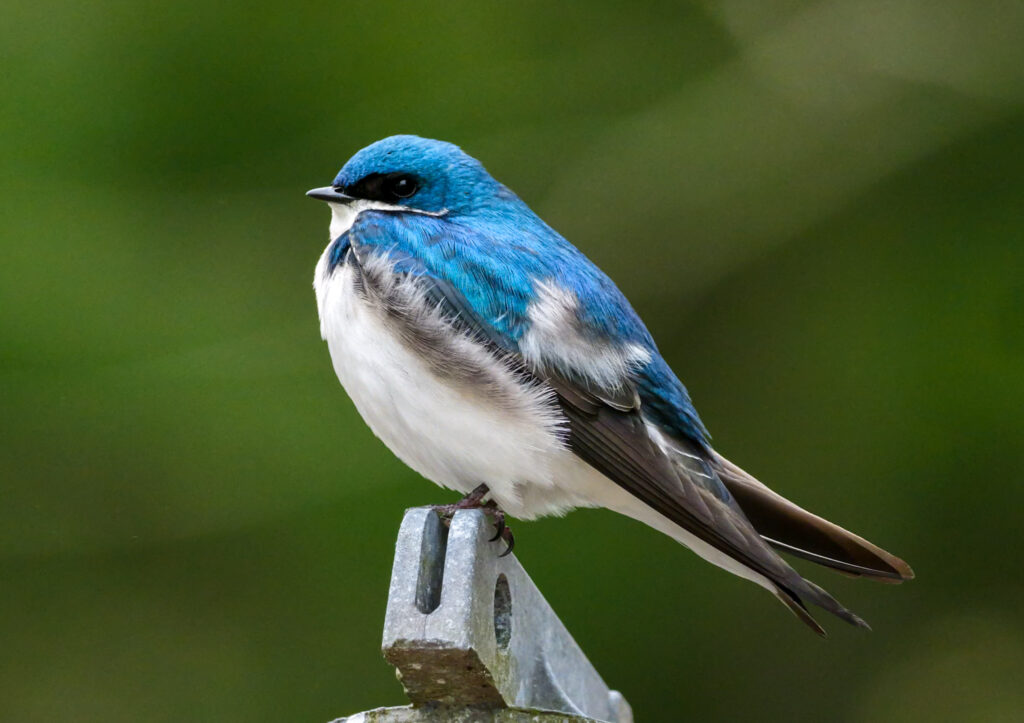
We categorize swallows as aerial insectivores—highly specialized birds that capture insects as their primary food source and do so almost exclusively while on the wing. There are four species that regularly nest in our area each summer, including the Tree Swallow, which is named for its tendency to nest and/or roost in tree cavities, but will also just as willingly use that birdhouse that you put out for the bluebirds or wrens. The familiar navy-and-orange Barn Swallow will build a nest of mud and twigs under your eaves (and can be quite aggressive!), and Purple Martins–our largest swallow–nest in colonies, the largest of which can be found right next to the Cape May Lighthouse.
But, back to Tree Swallows. October is undoubtedly their time in Cape May County. After the breeding season, as early as July, some start accumulating in reedbeds to spend the night communally, with favored phragmites-rich roosts found at locations such as Tuckahoe Wildlife Management Area, Fishing Creek Marsh, and Pond Creek Marsh. During the day, these birds venture out across the landscape, seeking out their insect meals. Numbers fluctuate through the season as birds come and go, with some departing south as others arrive from the north. But by September the season’s peak densities typically start to appear, with the largest numbers typically found by the middle of October.
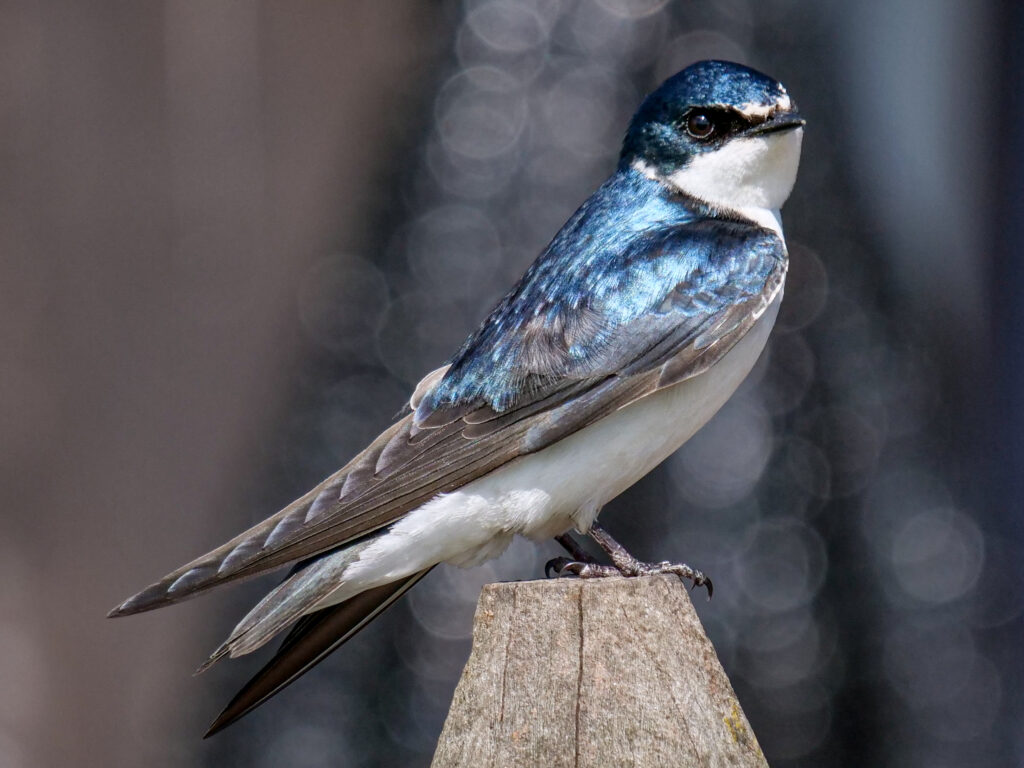
On warmer days the birds spread out, both vertically and horizontally, across the county’s airspace. But on cool, cloudy, breezy days, the green-and-white swallows become far more conspicuous, as their food sources are also forced closer to ground level. When conditions warrant and when insect life is limited, Tree Swallows can resort to consuming berries or seeds—an adaptation that allows them to migrate earlier in the spring, later in the fall, and permits them to spend the winter much farther north than other swallows, which are strictly insect consumers.
The ultimate Tree Swallow experience can usually be had at Cape May Point State Park, where tens of thousands can be found on certain days during the second half of October. The swirling masses, with the iconic lighthouse in the background, always make for a memorable sight. Go see it for yourself, before the swarms head south for the winter. And if it’s a day when they aren’t around, you can still spend time on the Cape May Hawkwatch, where the Cape May Bird Observatory’s team of counters and interpretive naturalists will point out everything else (and trust me, it’s a lot!) going on in the natural world that day.
See you out there!
Cape May, Naturally is a twice-monthly column about birding and all things nature, written by a rotating cast of experts at the New Jersey Audubon.