
One of the great things about migration season is the chance to really hone your bird identification skills because you can observe the same species over and over again. We know, for example, there are Peregrine Falcons in our area year-round. You might find one perched on the railings of the Avalon water tower on any given day. But Peregrine Falcons undergo plumage changes as they age, so after you’ve mastered the resident on the water tower, you may be stumped by a bird that looks kind of like it, but different.
Enter a northwest wind over Cape May in the month of September. That’s your chance to see all three of the falcon species most commonly found in New Jersey, ie. American Kestrel, Merlin and Peregrine, in great numbers and in a variety of plumages.
First, what’s a falcon? Look for birds that are fast, with pointy wings, round heads, hooked bills and big eyes. Then look for speed.
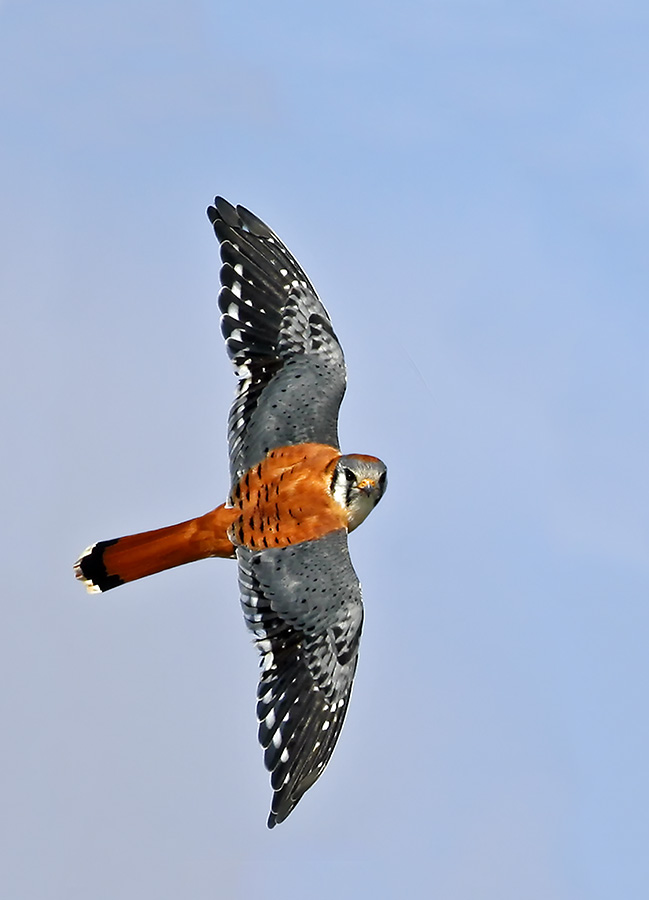
Our smallest falcon is the American Kestrel, and it’s also the most colorful. About the size of a Mourning Dove, male and female kestrels both have double stripes on their faces, sometimes called a “moustache and sideburns,” with one near the eye and the other around the side of their heads. They present with bright rusty backs and long slim wings, making them appear buoyant in flight. Males have blue-grey wings and a distinct black stripe at the bottom of their tails, while females are rusty all over with fairly narrow stripes on their tails. They’re known to take advantage of nest boxes in farm fields in north Jersey, but they’re pretty rare around here except for now.
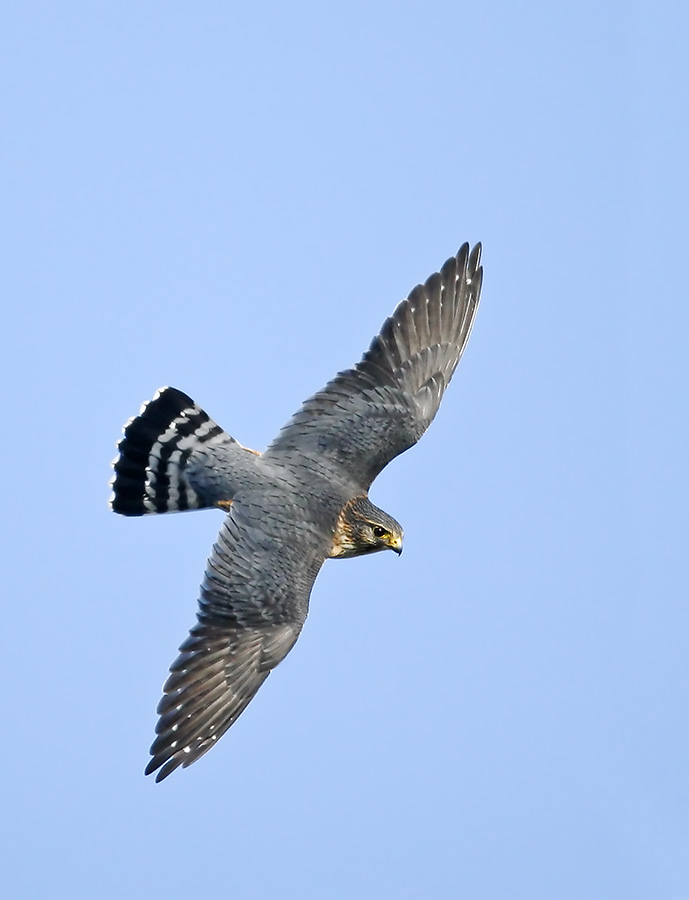
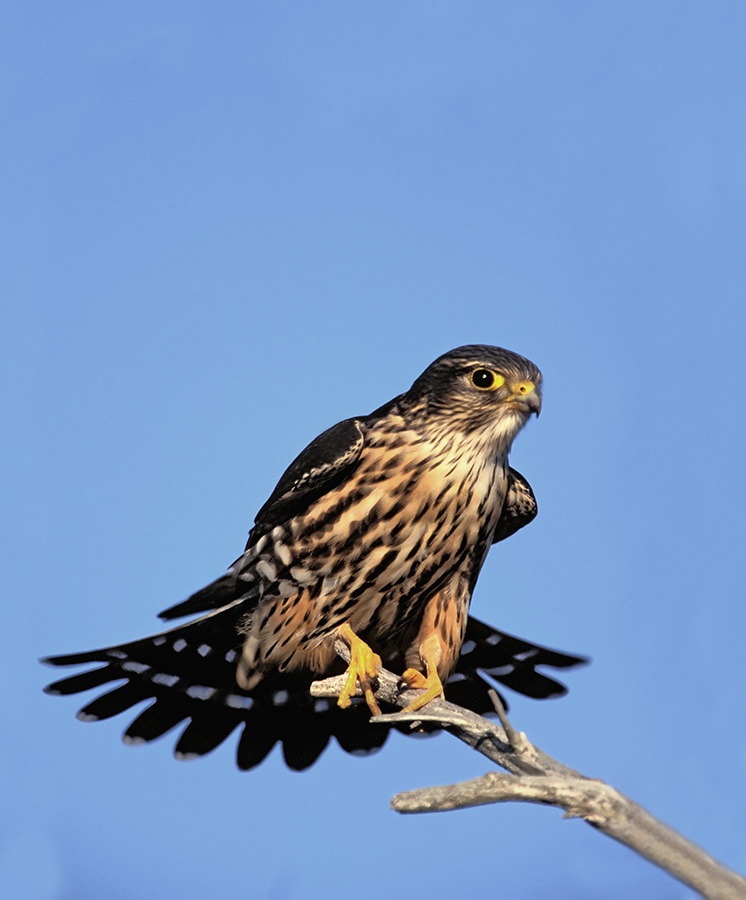
Next up in size is the Merlin. During migration, odds are you’ll see a younger bird, which is mostly dark brown with dense streaking on the breast. They have a moustache, but it’s almost indistinguishable, and they’re described as “stockier” and “sturdier” than a kestrel. For example, look for the thickness of the wing where it meets the body as it zooms past; because that’s likely all you’ll see of a Merlin during migration – a quick look as they head south over the Delaware Bay. Good thing there’ll be another, and another.
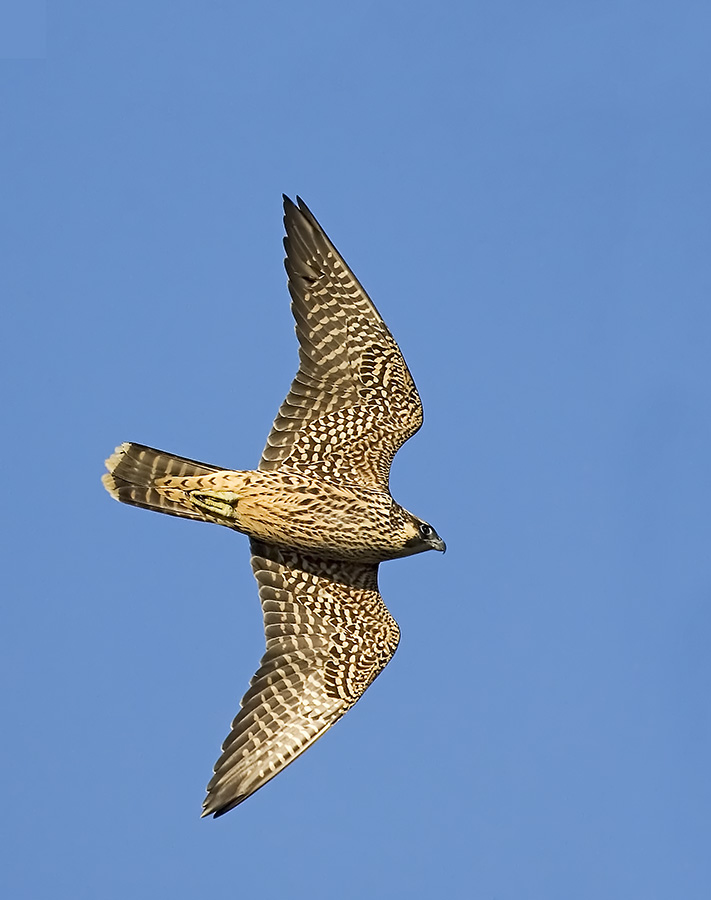
Last and definitely not least is the Peregrine Falcon, the fastest animal on earth. The largest of the falcons seen in New Jersey, Peregrines on the hunt can tuck in their wings, streamline their bodies and reach over 200 mph in a high-speed dive onto unsuspecting prey. As cool as that would be to see, they’re not often engaged in that when they’re passing through on migration, so watchers can get fantastic looks from various spots around Cape May.
As with Merlins, observers will see a lot of juvenile Peregrines during fall migration and they are mottled brown with a moustache. Adults have black heads with either a very large “sideburn” or a fully hooded appearance. They have rich grey backs and longish tails and light undersides. With their aerial skills, Peregrines are adept at snatching up birds in flight, which represents the bulk of their diet. Interestingly, Peregrine Falcons are found on every continent in the world, other than Antarctica. There, you might find their larger cousin, the Gyrfalcon.
If this brief overview of our three falcon species has piqued your interest, take a trip down to the Hawkwatch Platform at Cape May Point State Park anytime from now until the end of October. Volunteers are on hand to answer questions and get you on the birds. You may even see a raptor up close – one that has been captured and banded for future research and/or tracking by the Cape May Raptor Banding Project. Enjoy this incredible natural phenomenon right in our backyard.
Cape May, Naturally is a column written by a rotating cast of experts at the New Jersey Audubon. It runs every two weeks exclusively in the Herald.