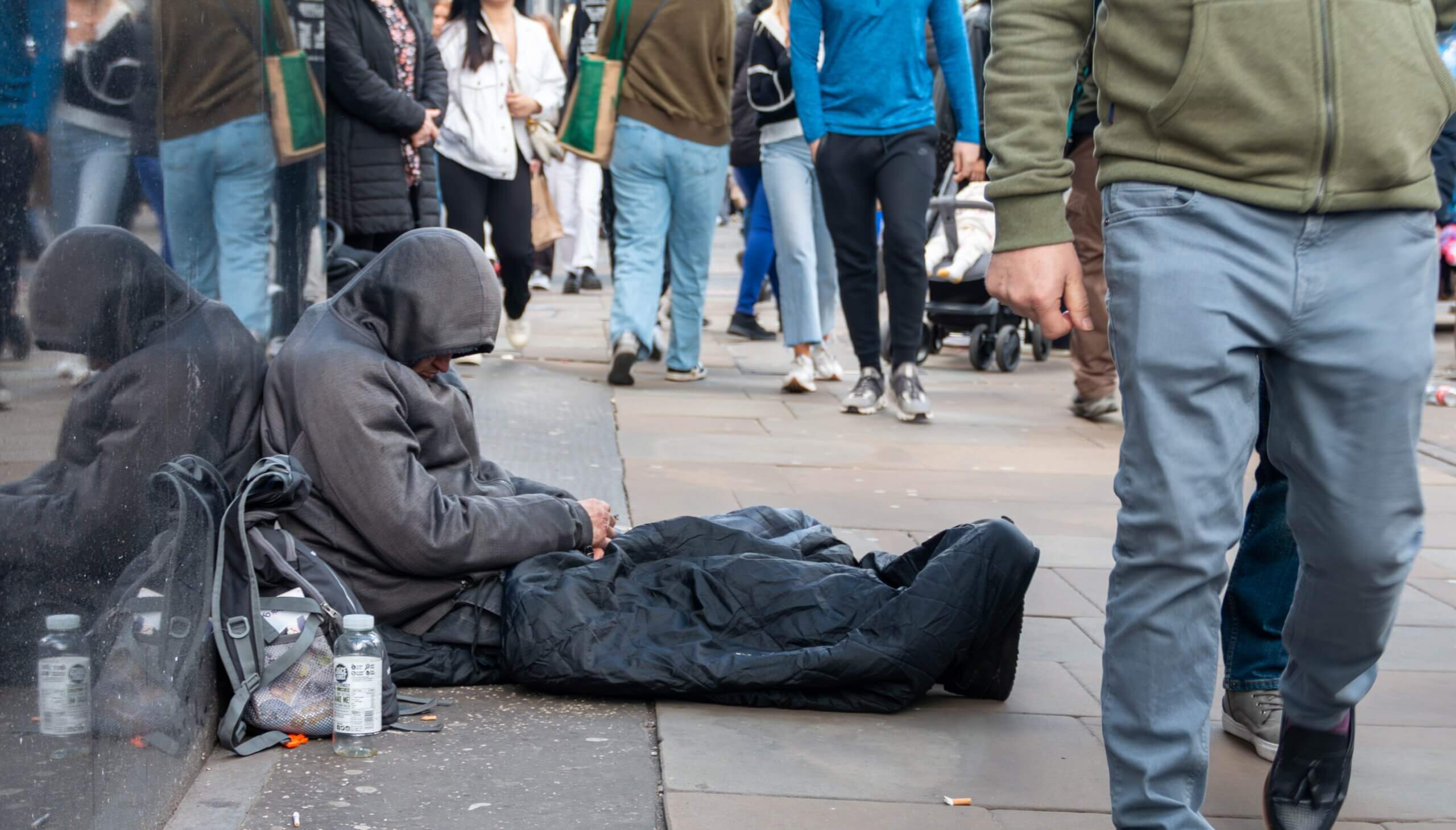
The annual one-night count of New Jersey’s homeless population taken this year found a 44% increase in the number of homeless in Cape May County compared to the count made last year.
On the night of Jan. 28, 2025, a total 300 persons, comprising 230 households, were counted as homeless in the county, according to Monarch Housing Associates, which performed the survey.
Last year the federally required count came up with 208 homeless people in Cape May County.
Of the 300 found to be homeless this year, 54 were children under age 18.
Some 275 of the 300 were staying in emergency shelters, which include any facility where a person does not have to sign a lease or occupancy agreement to stay, such as a Code Blue warming center or a local motel. The county has never had a homeless shelter.
On the night of the count, 15 were staying in traditional housing, and 10 were unsheltered.
Thirty of those counted were considered chronically homeless, meaning they had been homeless for a year or more. Forty said they had been a victim of domestic violence.
When compared to 2024, there was an increase in the number of homeless staying in emergency shelters. Last year 102 persons were in such shelters, while 15 were identified as unsheltered and 10 were in transitional housing.
Between 2021 and 2025, the count numbers showed an increase of 187 persons staying in emergency shelters in Cape May County, a 167% increase over the five-year period.
The report breaks down the homeless population by demographics. Over half, 50.7%, of the homeless were white, 21.3% were black, and 18.1% were Hispanic.
According to 2022 estimates by the Census Bureau, 95,634 people lived in Cape May County, and 9% (8,684 persons) of county residents were living below the poverty line.
“There is a strong correlation between poverty and homelessness; however, the racial disparities evident in the counted population indicate that poverty alone does not determine who will experience homelessness,” the report reads.
The report goes on to say that race seems to be more predictive of who would become homeless; however, it says more analysis needs to be done.
Denise Venturini-South, president and chief executive officer of Cape Hope, a nonprofit that advocates for the homeless, said that counting people is just a part of the process.
“The whys (of homelessness) have never been addressed: the lack of employment, mental health and a lack of housing stock – in that order,” she said.
Venturini-South said most people who are experiencing homelessness for the first time say they first lost their job or their hours were cut back.
The National Alliance to End Homelessness reported that the primary driver for homelessness was the national affordable housing crisis, exacerbated by a number of factors, including high housing costs and stagnant wages; persistent inflation; systemic racism; end of pandemic-era programs and a series of other factors, including a public health crisis, natural disasters and a rising number of immigrants to the U.S.
In this year’s count 81% reported their last permanent address as being in Cape May County, with 9% indicating they were from another county; for the remaining 10% this information was missing.
Of the 230 households represented in the count, 37 were families with at least one adult and one child under age 18. The average family size was 2.6 persons. Thirty-two families were in emergency shelters on the night of the count, whereas 95% of single adults who were homeless were in shelters. The age range most represented in the count was 35 to 44, which made up about 24% of the homeless in the count.
Some 60% of those counted indicated they had a disability. Breaking down the disabilities by type, 109 were mental, 95 were physical, 93 had a chronic health condition, 53 had a developmental disability and 37 had a substance abuse disorder. More than one category could apply to an individual.
President Donald Trump’s executive order “Ending Crime and Disorder on America’s Streets,” dated July 24, says 274,224 individuals were living on America’s streets during the last year of the Biden administration. U.S. Department of Housing and Urban Development figures from 2022 said there were 582,462 homeless Americans.
“The overwhelming majority of these individuals are addicted to drugs, have a mental health condition or both,” the president’s order reads.
Dr. Margot Kushel, who runs the Center for Vulnerable Populations at the University of San Francisco, has said that homeless people often pick up their addiction after becoming homeless.
Kushel, referring to mental illness in the homeless population in a 2022 article, said, “People with mental health problems are also much more likely to be victims of violence,” citing statistics saying 48% of homeless women had experienced violence without a weapon, 18% experienced violence with a weapon, and 18% had experienced sexual violence.
The president’s executive order calls for shifting the homeless into “long-term institutional settings” for treatment through “the appropriate use of civil commitment” as a way to restore public order. Civil commitment means placing people in mandatory care whether or not they are willing to go.
One of the difficulties facing the homeless is a lack of income to get the help they need. Among homeless households on the night of the 2025 count, 24% had no source of income; 2% reported having earned income. The most common sources of income among homeless households were General Assistance (39%) and Supplemental Security Income (21%).
Additionally, 1% of counted homeless households reported receiving no non-cash benefits on the night of the count, the Monarch report said. Food stamps (SNAP) were the top reported non-cash benefit, received by 80% of homeless households. Medicaid was the second most reported non-cash benefit, received by 53% of homeless households, the report said.
Cuts to programs such as Medicaid and SSI were considered to be major elements of Trump’s “One Big Beautiful Bill” passed by Congress and signed last month by the president.
Cape May County Commissioner Will Morey recently introduced a plan developed by a county advisory committee he leads to expand services for the homeless, including an additional $44,000 to supplement the General Assistance Transition to Employment pilot program to permit two additional months of housing assistance.
Other elements of the first phase of the plan include supplementing the Homeless Trust Fund Prevention Program and adding a Diversion Program through $125,000 to serve additional people at risk of homelessness, assigning $100,000 to homelessness prevention and the other $25,000 toward diversion; and $130,000 for emergency motel/shelter placement for non-Work First New Jersey-eligible clients, for up to 90 days and for use by agencies working with the homeless and agreeing to provide case management service.
A resolution creating those programs is expected to be voted on at the next county commissioners meeting, Tuesday, Aug. 12.