The William J. Hughes Center for Public Policy at Stockton University held an online panel discussion on New Jersey’s energy future, on the heels of a Stockton Polling Institute report that showed most New Jerseyans want a greater priority placed on the affordability of energy while the state still progresses toward expanding renewable sources of power.
The panel included Board of Public Utilities President Christine Guhl-Sadovy, Erick Ford, president of the New Jersey Energy Coalition, Richard Henning, president and CEO of the New Jersey Utilities Association, and Christina Renna, president and CEO of the Chamber of Commerce of Southern New Jersey.
The discussion came as the BPU is working to complete a new state energy master plan before Gov. Phil Murphy leaves office in January. His energy policies are a major part of his legacy; they have evoked both passionate support and strong opposition.
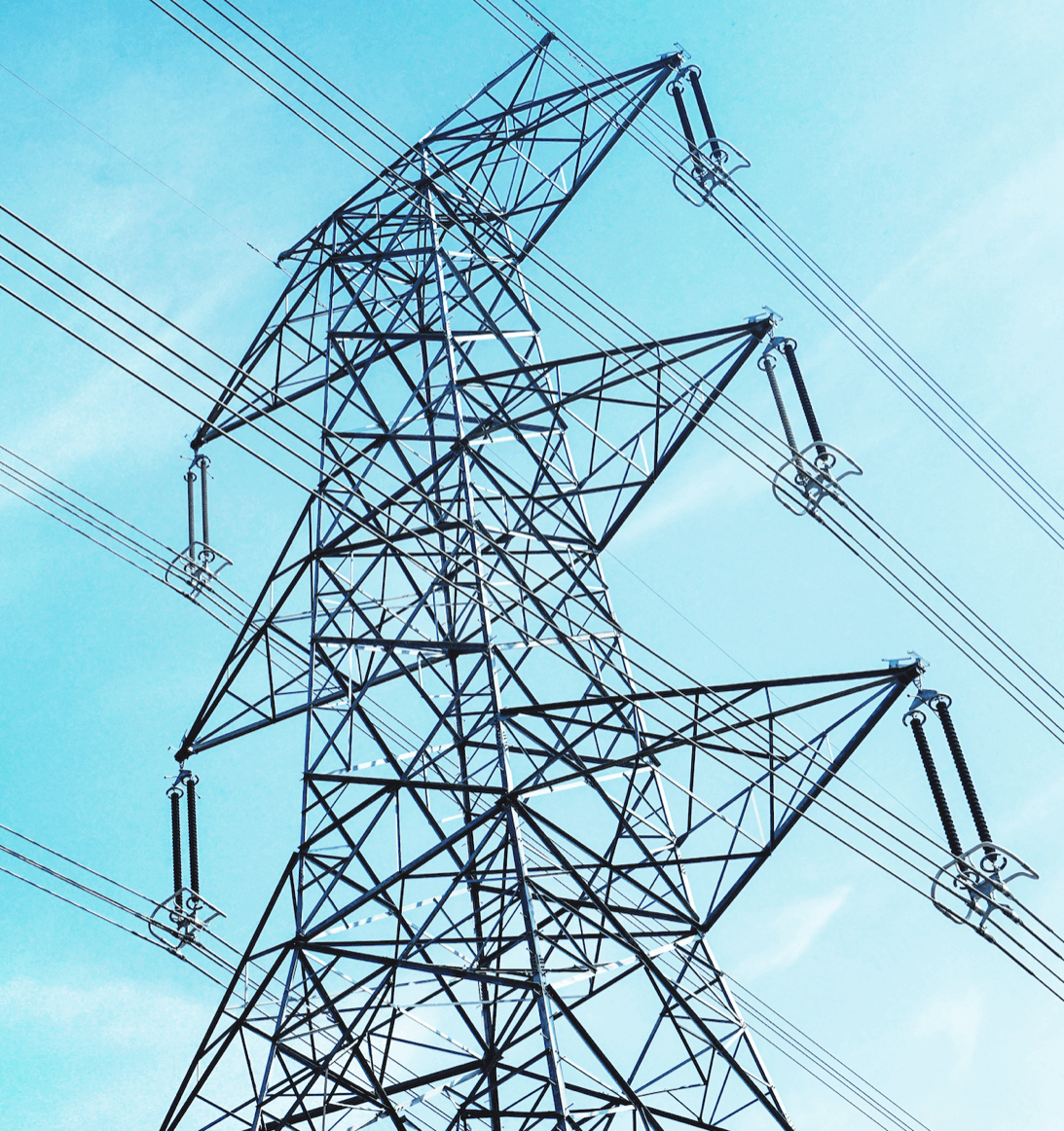
A consensus among the panelists was state’s need for increasing its electricity generating capacity. Ford pointed to the fact that the state is a net importer of energy, citing Maryland as another state that consumes much more electric energy than it generates. In a world in which the supply of electricity is struggling to keep up with soaring demand, the fact that New Jersey is a net importer of power increases the state’s vulnerability to market shifts.
Ford noted that New Jersey has seen sources of electricity generation leave the grid without new sources being ready to replace the lost power. Guhl-Sadovy argued that this could not have been predicted given the sudden spikes in demand since 2023, due largely to the creation of large data centers running artificial intelligence software.
Renna warned that it is dangerous to just blame data center development for high energy prices because the state’s economic future is tied to the need to embrace a more digital age. “I am concerned when I see other states that are friendlier to data center construction,” she said.
Calling herself an “energy agnostic,” Renna said the new state plan needs to focus on ways to support a more digital future with the power it needs. She also called for more efforts to develop a workforce capable of succeeding in a more “digitally intense” economy.
Henning urged those listening to realize that the issue the state is facing has been a long time coming. He pointed to the state’s move to deregulate the electricity generation market in 1999. The utilities that deliver energy to Garden State homes largely withdrew from power generation and turned to getting power through the PJM Interconnection auctions. PJM is the grid operator for 13 states including New Jersey. PJM is also the organization blamed by Murphy for the state’s supply-demand imbalance.
All of the panelists agreed that innovation is key to the state’s energy future. They also agreed – and this is the bad news for consumers – that new power sources are at least five to 10 years out. While there are steps that can be taken, and the ones most talked about were solar and storage technologies, any attempt to relieve the pressure on electricity pricing through increasing supply is a multiyear effort that will not have immediate results.
There was general agreement that the new state energy plan would be completed during Murphy’s remaining months in office. What no one could speak to is what this means for a new governor who takes office in January.
Henning called an updated plan a blueprint for a new governor, but it is hard to see how a Republican like Jack Ciattarelli, who has a strong endorsement from President Donald Trump, will want a “blueprint” from Murphy. It is not even clear that Democrat Mikie Sherrill would embrace Murphy’s vision of the energy future.
Guhl-Sadovy, as president of the BPU, the organization working on the new energy plan, inserted praise for the Murphy administration repeatedly in her remarks. When discussing supply problems she criticized the “new administration” in Washington, even though Trump did not take office until January.
Saying the state had been “on track” to supply offshore wind power as a major addition to the grid, Guhl-Sadovy ignored the fact that the state’s schedule for supplying power from offshore wind farms was thrown into disarray in October 2023 when the Danish firm Orsted walked away from its commitment to two wind farms. Murphy responded with an executive order that increased the target for the amount of electricity from offshore wind even while other wind farm developers faced an increasing number of roadblocks in their path.
The Trump administration’s hostility to offshore wind is certainly now a factor in any new state energy plan, but the offshore wind component of the first energy plan was already in serious trouble before the 2024 election.
Guhl-Sadovy did mention the new cap on prices inserted into the PJM capacity action that opened on the same day as the panel discussion. Her hope is that the cap, forced on PJM by Pennsylvania Governor Josh Shapiro’s formal complaint, which was supported by Murphy, would limit the price increase coming out of this auction.
All of the panelists talked about innovation and called the audience’s attention to New Jersey success stories. They spoke of rising prices in all areas and not just energy. They mentioned the need for investment if the state is to properly modernize the grid. There was some talk about energy prices with a focus on programs to help those who cannot pay.
But a larger safety net of assistance programs may not do the trick as the population that struggles to pay utility bills grows.
It is also the case that New Jersey lawmakers are engaged in their long-established practice of diverting funds. As the Herald recently reported, mandated fees paid by electric utility customers for a fund to provide assistance with energy bills and a movement to a cleaner energy future were diverted in the state budget just passed when lawmakers used $140 million from the clean energy fund to support the budget for NJ Transit. These are the same lawmakers who only recently spoke of their laser focus on energy costs.
With only months to go for the Murphy administration, the public can expect to see the new energy master plan soon. What those who watched the panel discussion heard is that the direction of the New Jersey energy future is uncertain. It is heavily dependent on innovation and new technologies. Perhaps most importantly, it is likely to cost more long before it can cost less.
Contact the reporter, Vince Conti, at vconti@cmcherald.com.