
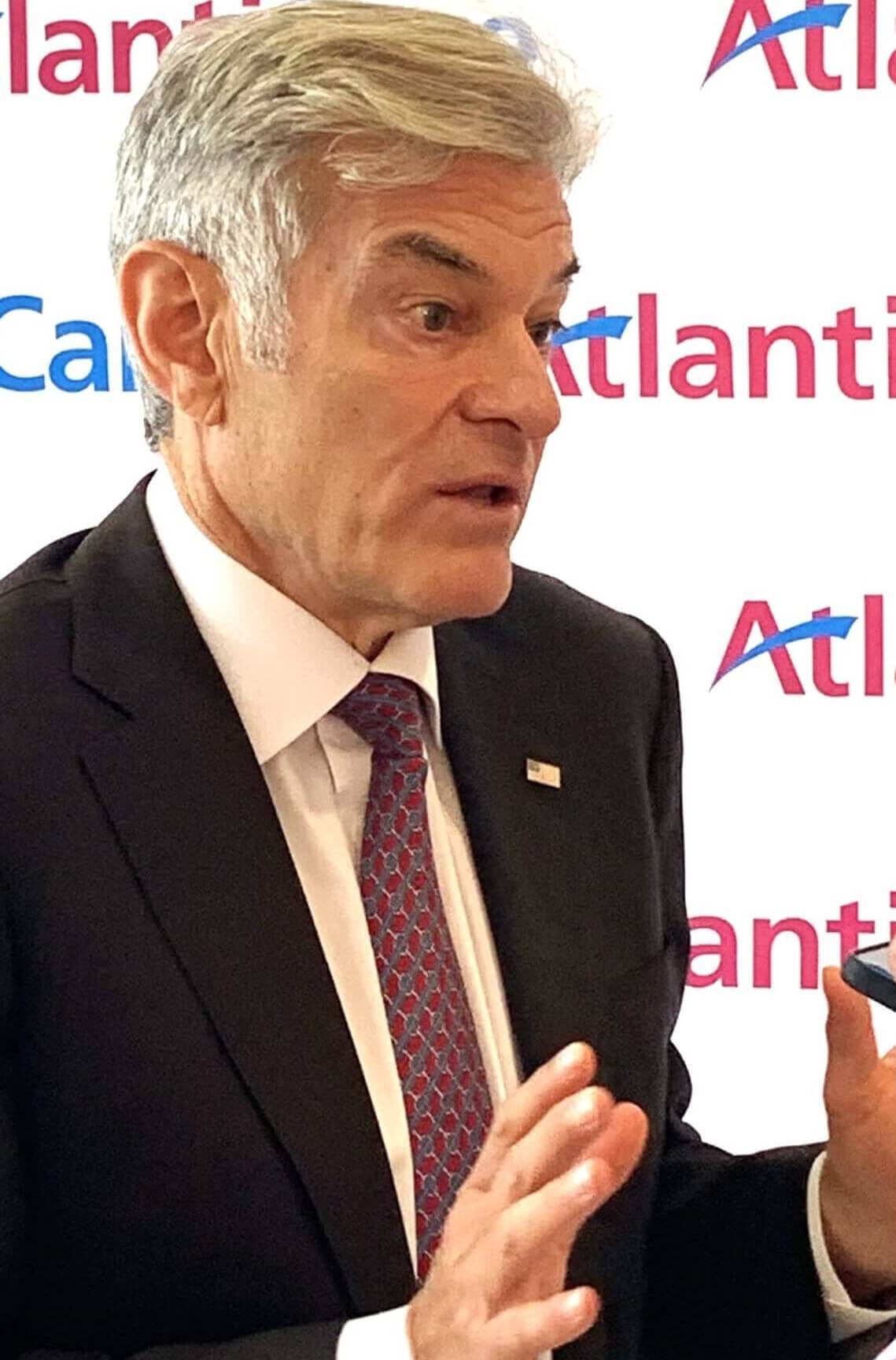
ATLANTIC CITY – Dr. Mehmet Oz, the nation’s new Centers for Medicare & Medicaid Services administrator, visited the city on Friday, July 18, to tour the town and its AtlantiCare facilities, and to take part in a roundtable discussion on health-care issues.
Oz, who was appointed to his position in April by President Donald Trump, told members of the press that as a heart surgeon at Columbia University Medical Center he was familiar with the stress health problems place on people of lesser economic means.
He told reporters that he toured facilities in Atlantic City and saw boarded-up town houses as well as the AtlantiCare Federally Qualified Health Center, which offers health care to individuals regardless of their ability to pay.
There, he said, he saw individuals receiving health care and the “light in the eyes of the providers.”

Addressing the audience, Oz said, “You know how petrifying it is when you have an illness, and you don’t know what to do, and it’s expensive sometimes, and you don’t want to have to decide between groceries and your medication.”
He referred to creating welcoming places, places that actually seek out those in need of health-care services. He said he took the job because he understands people’s needs in terms of health care.
“I took this job because I care about the same issues you care about,” he said. “I took this job because, like many of you, I see a system that is broken. We spend twice as much on health care per capita as anywhere else in the world. We are spending more on health care than we are growing our economy. There are many parts of the system that are broken.”
In Cape May County, some residents tried to persuade the Board of County Commissioners to tell federal legislators to oppose slashing Medicaid and SNAP benefits that so many people depend on. The commissioners avoided addressing the public’s concerns, saying at the time it was not appropriate to comment on a bill that wasn’t settled. The so-called “One, big, beautiful bill” was signed by the president on July 4, without any public comment from the county commissioners.
Oz went on to say that the nation is facing a health-care crisis, saying, “I don’t want to waste this crisis.”
“I think we have a wonderful opportunity to address the infrastructure challenges our nation faces, and I think programs like this are a shining example of how we can do that well,” he said, referring to the $50 billion Rural Health Transformation Program that is part of the massive spending and tax bill just passed.
Oz said the federal government would be putting the $50 billion to use by the end of the year, and they are urging governors to apply for funding and “wisely find places to apply it,” whether it is used to address manpower issues, technology or training doctors and nurses, for example.
He said AtlantiCare, in cooperation with Stockton University, is currently training 60 nurses per year. He said what is being done locally can be used as an example for other parts of the country, and their successes can be shared here.
“If we do this together, we will lift all boats,” he said.
AtlantiCare CEO Michael Charlton said that Stockton, its president and provost have committed to its nursing and health sciences program. He said Oz is showing a commitment to developing health care in the region and the nation, and that he understands the impact the rural care program would have on the community.
“He will ask the tough questions,” Charlton said.
Oz was invited and hosted by AtlantiCare and toured Atlantic City before participating in a private roundtable with bipartisan leaders from Congress, the American Hospital Association, Oracle Health, Atlantic Health System, Drexel University and Stockton University.
The discussion, which was not open to reporters, was to explore how national policy translates on the ground and what it will take to strengthen care, simplify regulation, support the workforce and advance innovation.
Discussion topics were to include community health and social determinants: addressing housing, education, income and food insecurity as foundational to long-term health; prevention and population health: exploring where incentives fall short and what it will take to build a sustainable culture of proactive care; regulatory simplification: identifying opportunities to reduce administrative burdens and improve access without compromising quality or oversight; and technology and innovation: examining scalable applications of digital health, AI, virtual care and cross-system data sharing.
Contact the reporter, Christopher South, at csouth@cmcherald.com or call 609-886-8600, ext. 128.